
From material to instrument performance
A control only makes sense when tied to what it verifies. The chain below links material selection to expected performance in theatre, control by control.
Five links
- 01
Material
Architecture and grade chosen by function
- 02
Manufacturing and finishing
Forming, heat treatment, surface condition
- 03
Mechanical property
Hardness, elasticity, edge retention
- 04
Control
Documented protocols, per architecture
- 05
Performance
Expected behaviour in the operating theatre
What is verified
MEDLANE documented modules linked to their source. They do not constitute the release criteria in force.
The five control families
- Rockwell hardness testing.
- Visual and functional inspection.
- Mechanical testing.
- Cutting performance testing.
- Corrosion-resistance testing.
MEDLANE documentation · Dossier technique instrumentation MEDLANE — version 21 · 2021-12
Quality system in force
- MEDLANE's quality management system is certified to ISO 13485:2016 by IMQ (certificate 0270.2026) for the design, production management and distribution of operating-room surgical instrumentation and sterilization containers.
Current QMS · Certificat ISO 13485:2016 — IMQ 0270.2026 · 2026-03
How a test is run
Each protocol is presented as it appears in MEDLANE technical documentation, without reproducing any obsolete standard reference.
Elasticity test
- 01The instrument is closed to the last ratchet tooth and held under load for 3 hours at room temperature.
- 02After the corrosion test, the instrument is inspected for cracks and permanent deformation.
MEDLANE documentation · Dossier technique instrumentation MEDLANE — version 21 · 2021-12
Related architecture in the atlas →Gripping function test
- 01A plastic thread or suture of diameter 0.2 mm or less is placed in the active part, then the instrument is closed.
- 02A 20 N pull is applied: the thread must not escape under either longitudinal or transverse load.
MEDLANE documentation · Dossier technique instrumentation MEDLANE — version 21 · 2021-12
Related architecture in the atlas →Cutting test
- 01The test material is selected according to the instrument category; Mayo and Metzenbaum scissors appear in the “medium, ring-handled” category of the documented table.
- 02Cutting is performed over two thirds of the blade, three times, without lateral pressure.
- 03The expected cut is clean, with no tearing of the test material.
MEDLANE documentation · Dossier technique instrumentation MEDLANE — version 21 · 2021-12
Related architecture in the atlas →Corrosion test
- 01A cleaning cycle is applied to the instrument before testing.
- 02The instrument is immersed in demineralised water at 90 °C for 1 hour, then air-dried.
- 03Visual inspection looks for rust marks, micro-cracks and other surface defects.
MEDLANE documentation · Dossier technique instrumentation MEDLANE — version 21 · 2021-12
Related architecture in the atlas →Protocols described for their educational value. The applicable acceptance criteria and the standards in force are managed within the MEDLANE quality system.
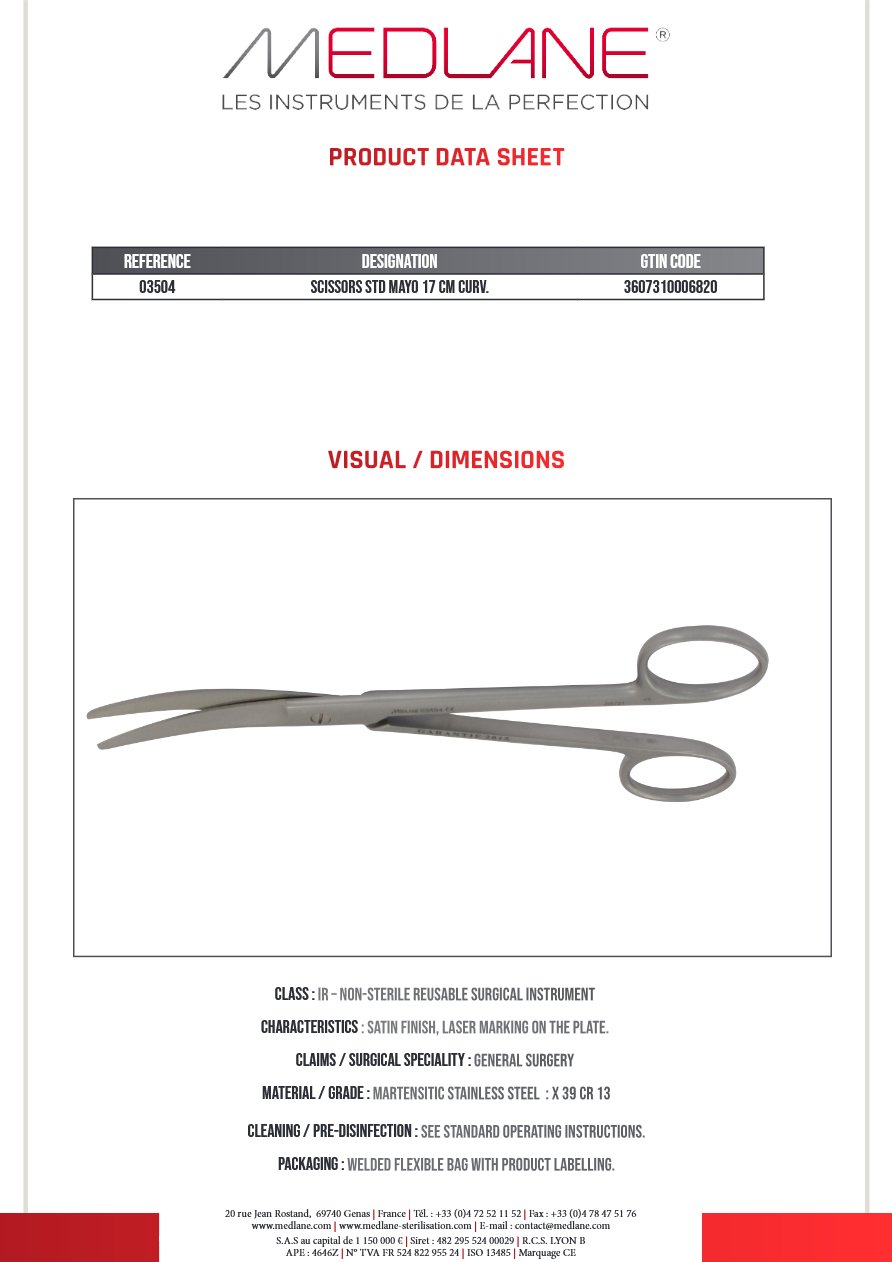
Ciseaux Courants Mayo 170 mm Courbe
Cutting test — ring-handled scissors
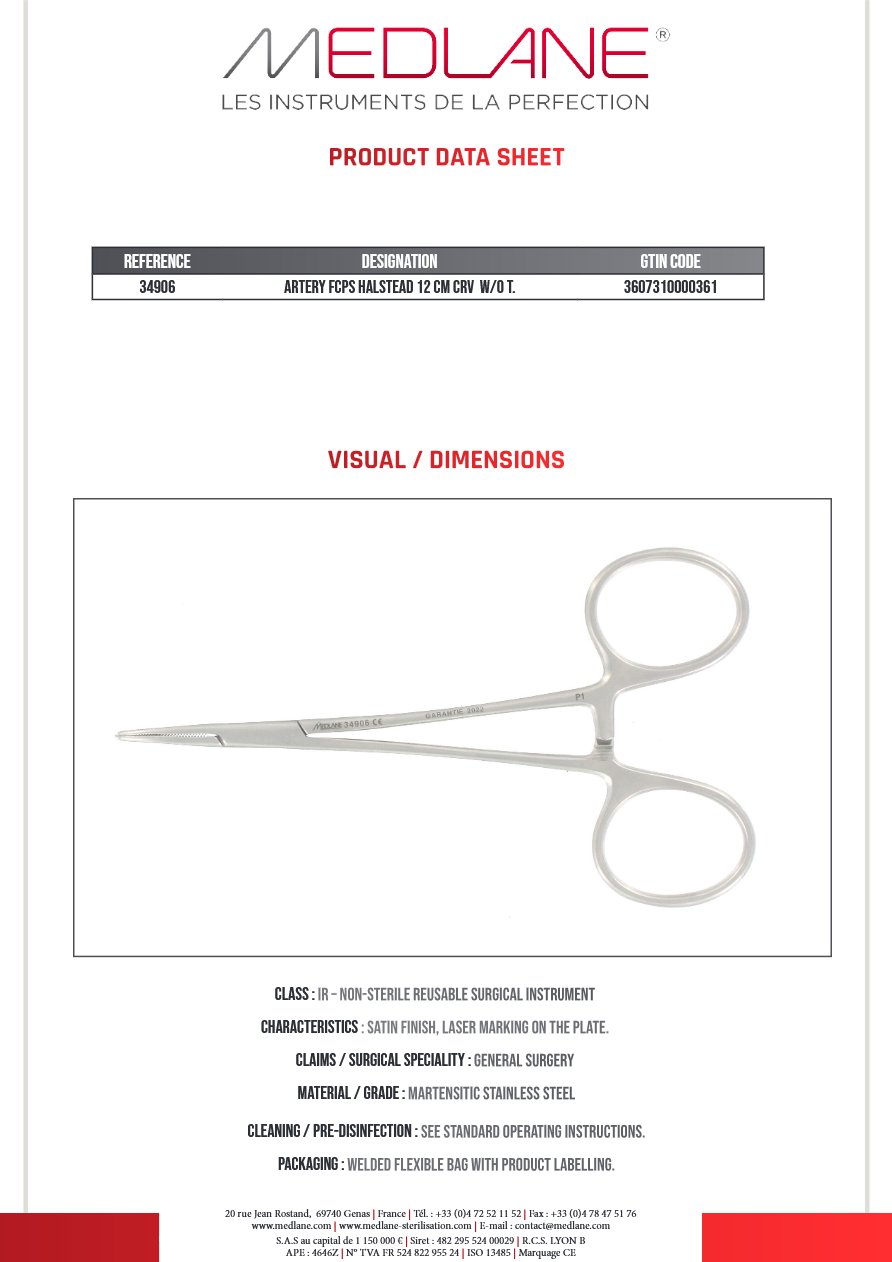
Pince Hémostatique Halstead 120 mm C. sans Griffes
Elasticity test — ratchet closed
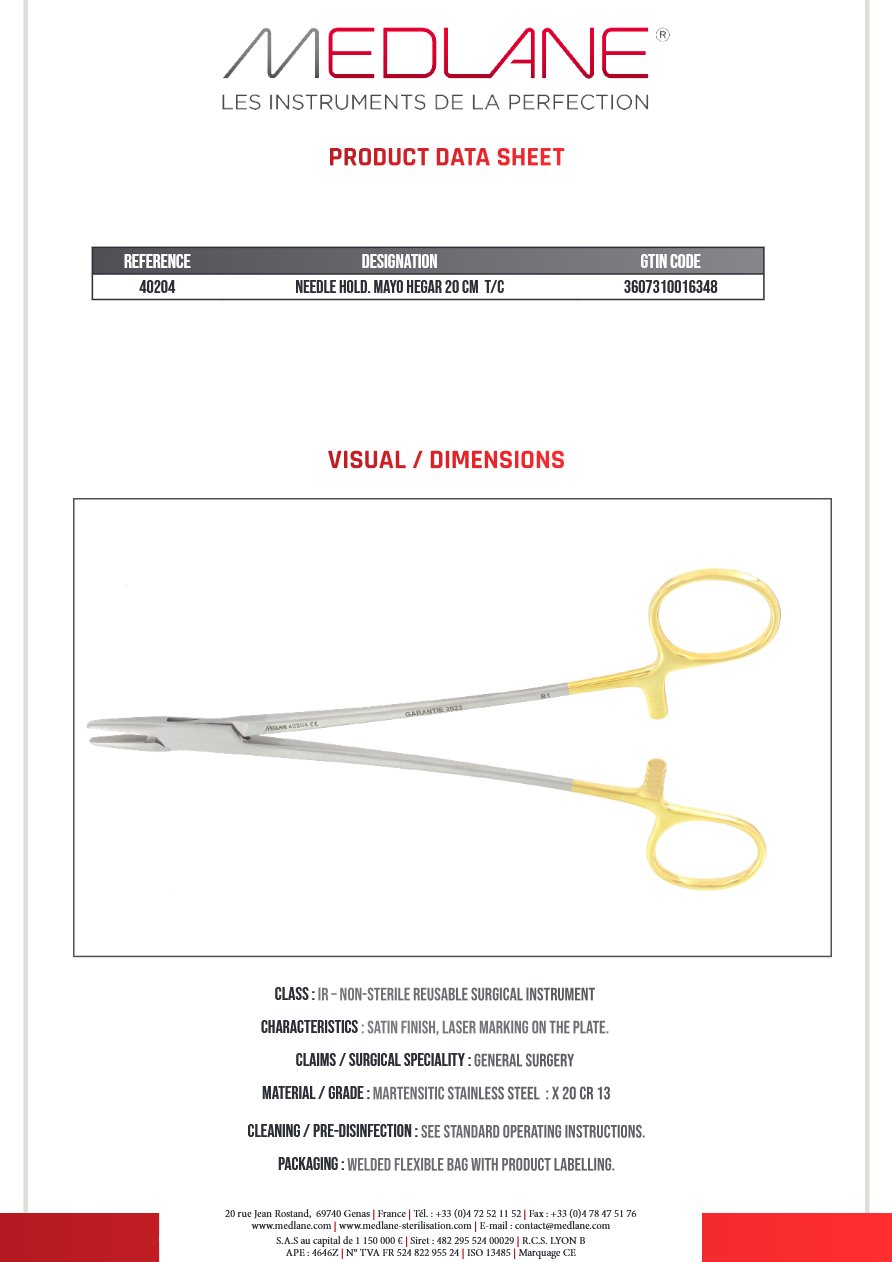
Porte Aiguille Mayo Hegar 200 mm Tungstène
Function test — tungsten-carbide jaws