Kocher, Kelly, Crile, Halsted and Leriche all belong to the broad family of haemostatic forceps. To an untrained eye their silhouettes can look alike: finger rings, ratchet, box lock and jaws suggest one and the same architecture. Yet a few details are often enough to tell them apart.
Teeth, jaw fineness, the extent of the serrations, overall proportions and dimensions are all clues.
Learning to recognise these differences means starting to read the instrument rather than simply memorising its name.
Five names, five instrumental signatures
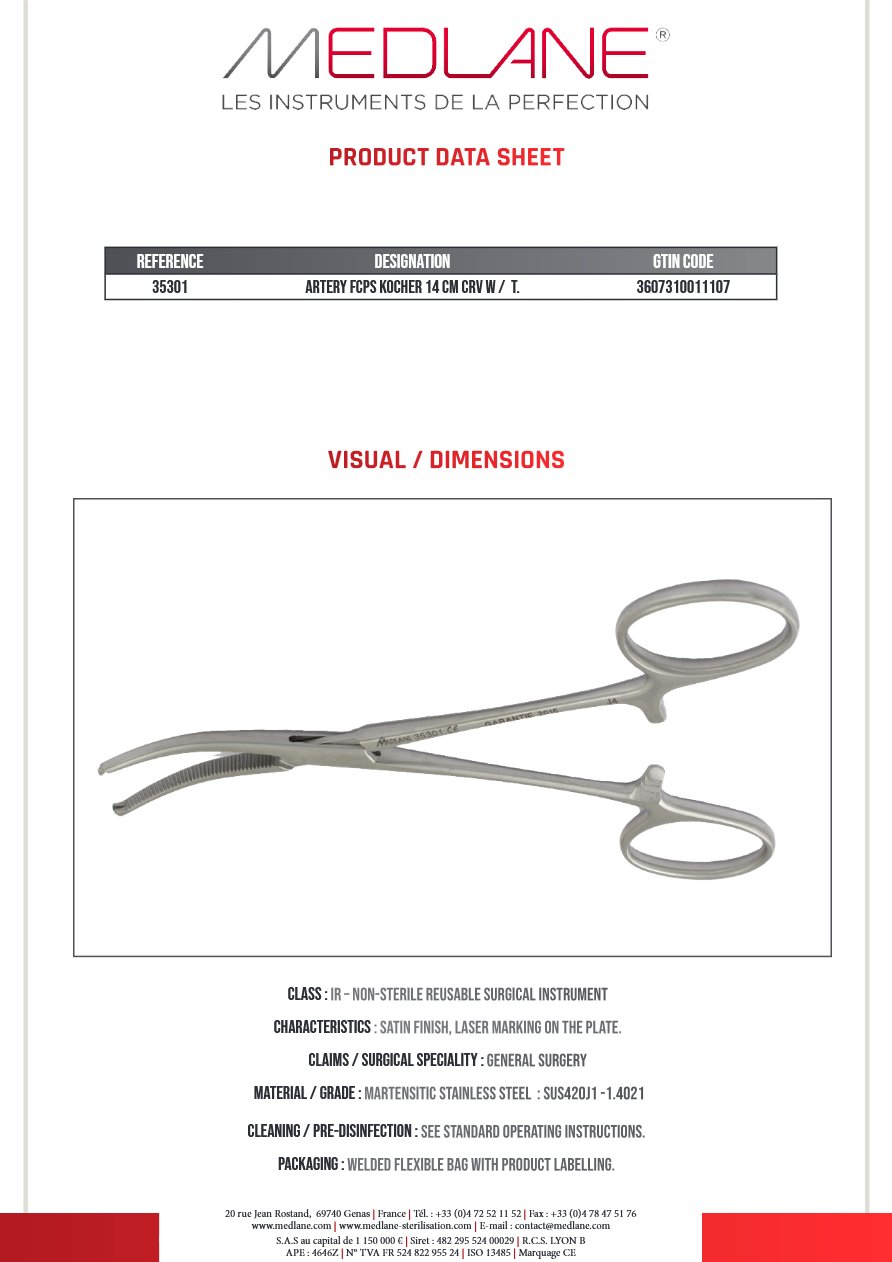
Pince Hémostatique Kocher 140 mm C. avec Griffes · REF 35301P
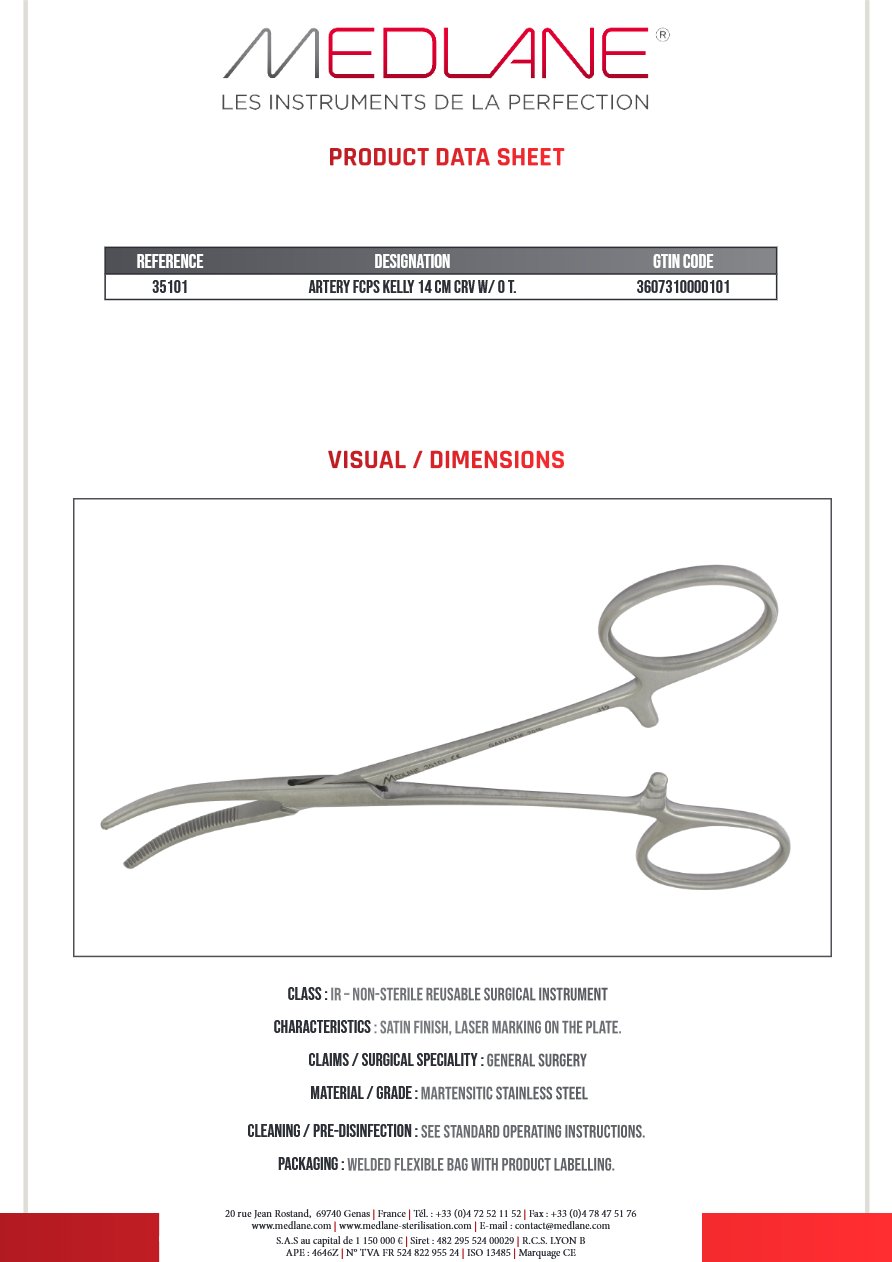
Pince Hémostatique Kelly 140 mm C. sans Griffes · REF 35101P
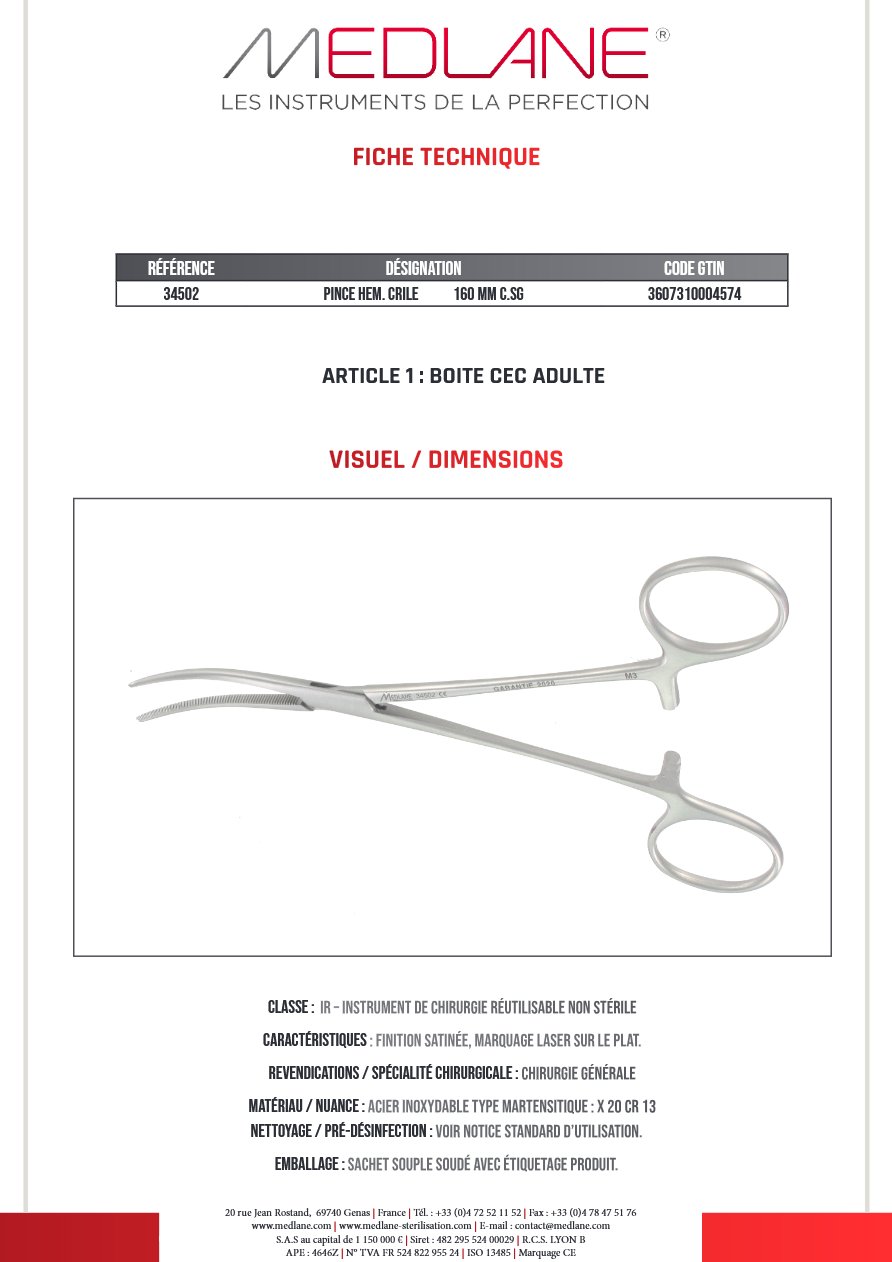
Pince Hémostatique Crile 160 mm C. sans Griffes · REF 34502P
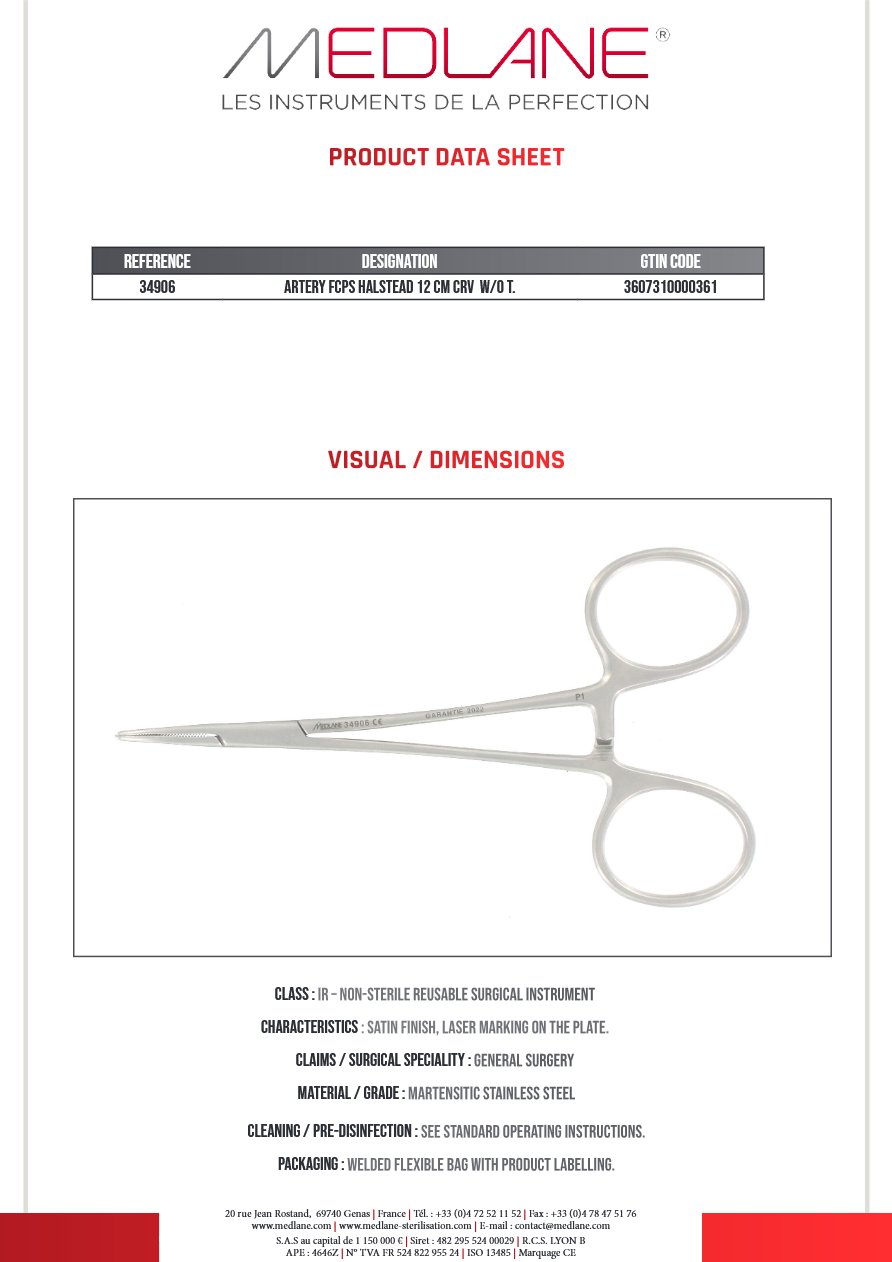
Pince Hémostatique Halstead 120 mm C. sans Griffes · REF 34906P
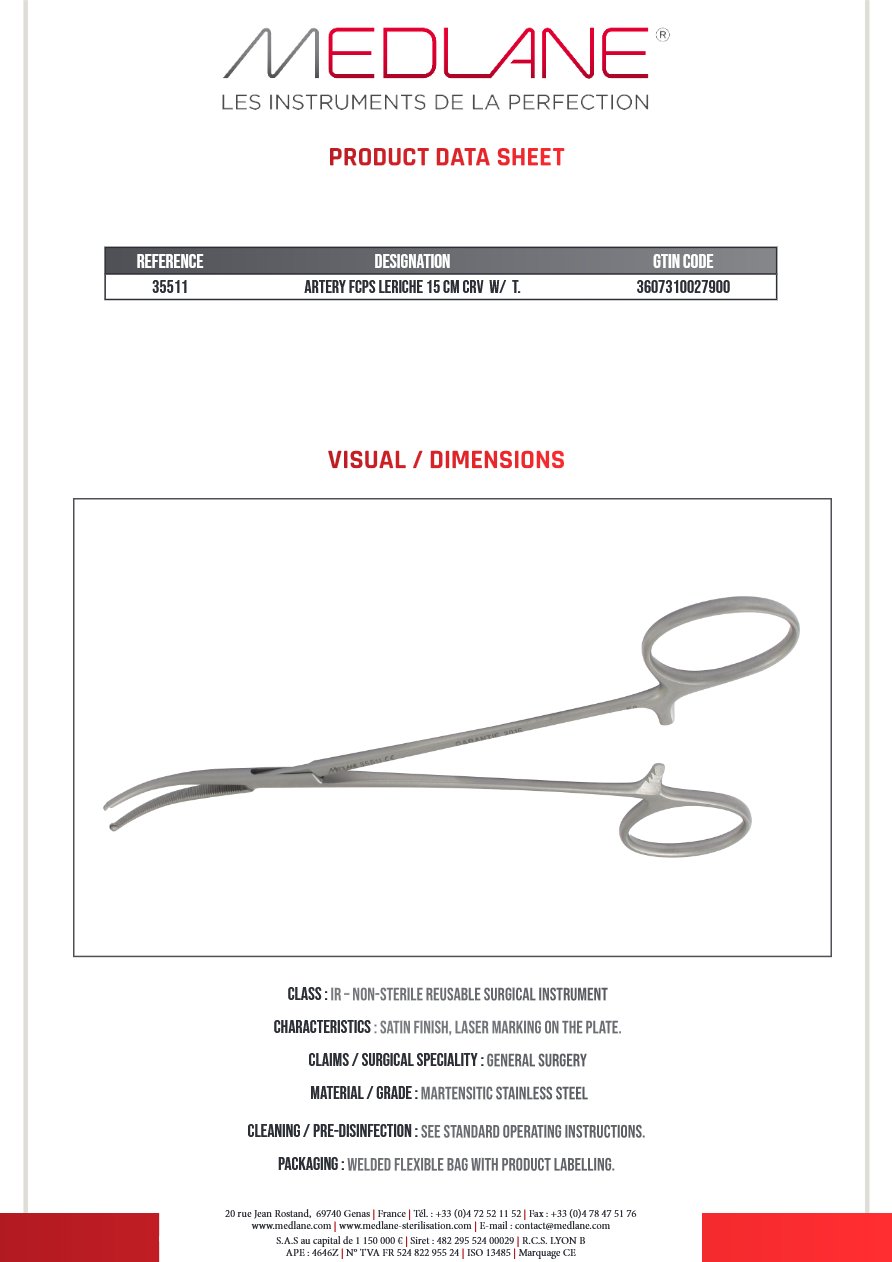
Pince Hémostatique Leriche 150 mm C. avec Griffes · REF 35511P
KOCHER
- Robust silhouette
- Serrated jaws, terminal teeth on toothed configurations
- In its conventional configuration, terminal teeth are the distinguishing sign
- MEDLANE variants: straight or curved, with or without teeth, several lengths
KELLY
- Intermediate silhouette
- In its conventional configuration, transverse serrations on the distal part of the jaws
- Relatively fine jaws
- MEDLANE variants: straight or curved, with or without teeth, several lengths
CRILE
- Silhouette close to the Kelly
- In its conventional configuration, serrations along the whole working length of the jaws
- Relatively fine jaws
- MEDLANE variants: straight or curved, several lengths
HALSTED
- In its conventional configuration, a generally smaller and finer silhouette
- Name conventionally associated with a delicate haemostatic forceps
- No universal dimensional threshold: refer to the exact designation
- MEDLANE variants: straight or curved, with or without teeth, micro versions
LERICHE
- In the MEDLANE catalogue: straight and curved versions
- Configurations with and without teeth
- Several referenced lengths
- Declined variants, including Upline versions
Variants exist depending on the model: final identification is made from the exact reference and documentation.
Look at the jaws
Full instrument → observed zone → identifying detail
- 01 — TIPS · TOOTHED CONFIGURATION
- 02 — TRANSVERSE SERRATIONS
- 01 — TIPS WITHOUT TEETH
- 02 — OBSERVED SERRATED AREA
- 01 — TIPS WITHOUT TEETH
- 02 — EXTENDED SERRATIONS
- 01 — FINE JAWS
- 02 — CLOSE-SET SERRATIONS
- 01 — TIPS · TOOTHED CONFIGURATION
- 02 — TRANSVERSE SERRATIONS
From a distance, the silhouettes look alike. From a few centimetres away, their identity appears.
Behind the names
1852 — 1922
William Stewart Halsted
American surgeon and a major figure of modern surgery. His name is associated with the Halsted haemostatic forceps.
1879 — 1955
René Leriche
French surgeon, a recognised pioneer of vascular surgery.
Like the previous ones, these three names are eponyms: they designate instruments whose designation has remained attached to a surgeon. MEDLANE publishes no detailed biographical attribution here that is not reliably established.
The history of surgery is still present in the names of the instruments used every day.
Anatomy of a haemostatic forceps
Five readings, five identities
KOCHER
- Robust silhouette
- Serrated jaws, terminal teeth on toothed configurations
- In its conventional configuration, terminal teeth are the distinguishing sign
- MEDLANE variants: straight or curved, with or without teeth, several lengths
KELLY
- Intermediate silhouette
- In its conventional configuration, transverse serrations on the distal part of the jaws
- Relatively fine jaws
- MEDLANE variants: straight or curved, with or without teeth, several lengths
CRILE
- Silhouette close to the Kelly
- In its conventional configuration, serrations along the whole working length of the jaws
- Relatively fine jaws
- MEDLANE variants: straight or curved, several lengths
HALSTED
- In its conventional configuration, a generally smaller and finer silhouette
- Name conventionally associated with a delicate haemostatic forceps
- No universal dimensional threshold: refer to the exact designation
- MEDLANE variants: straight or curved, with or without teeth, micro versions
LERICHE
- In the MEDLANE catalogue: straight and curved versions
- Configurations with and without teeth
- Several referenced lengths
- Declined variants, including Upline versions
The name designates a family of instruments; the reference specifies the configuration.
One family, several variants
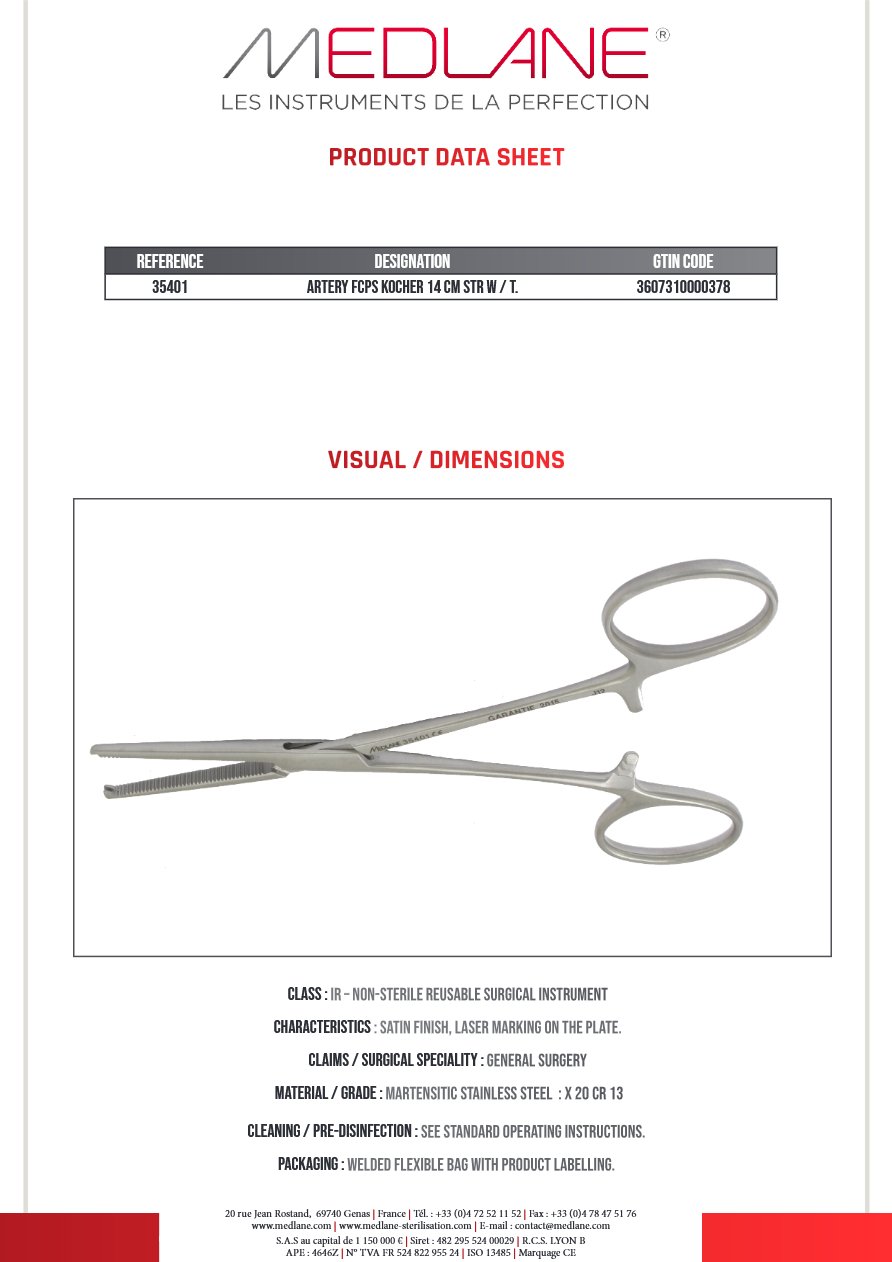
Pince Hémostatique Kocher 140 mm D. avec Griffes
REF · 35401P· 140 mm· Straight· With teeth
Pince Hémostatique Kocher 140 mm C. avec Griffes
REF · 35301P· 140 mm· Curved· With teeth
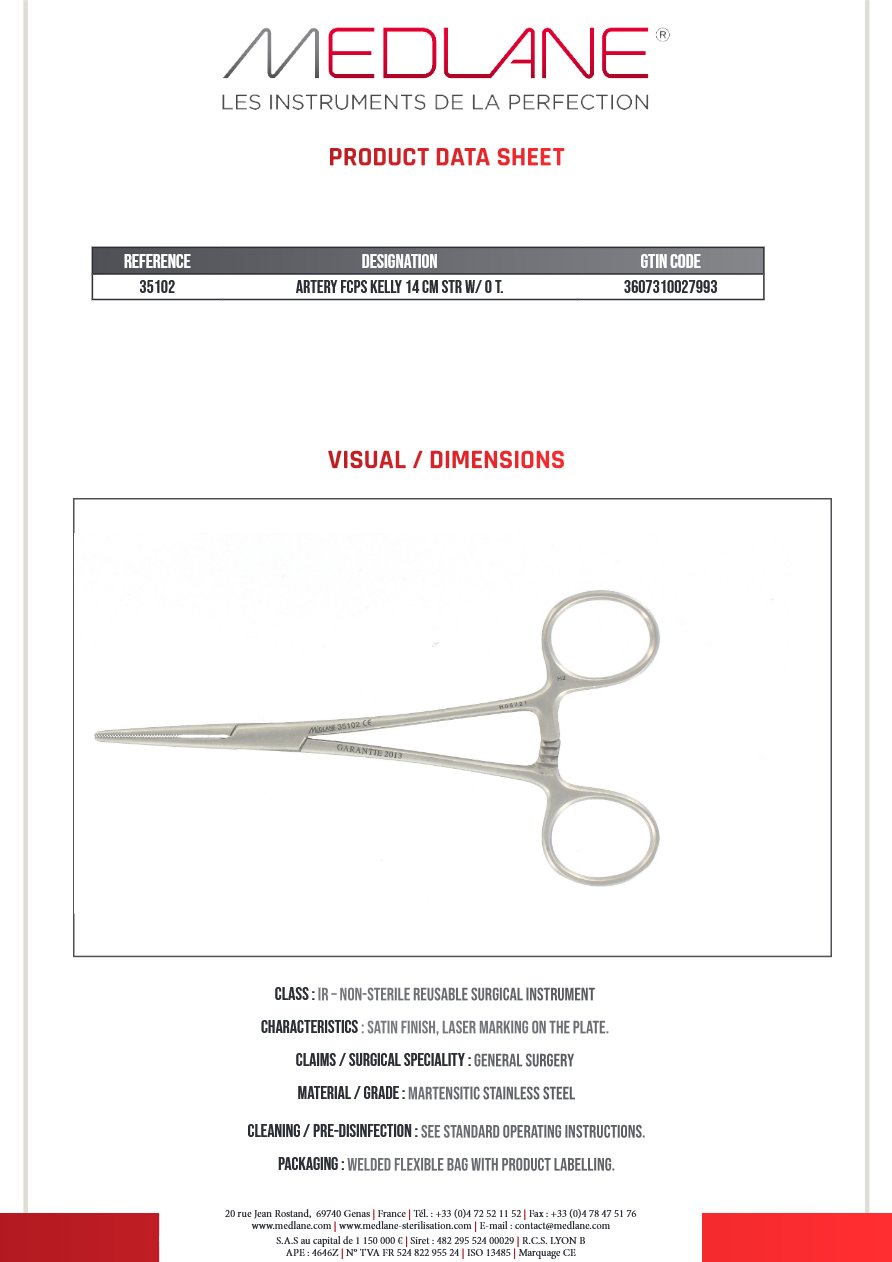
Pince Hémostatique Kelly 140 mm D. sans Griffes
REF · 35102F· 140 mm· Straight· Without teeth
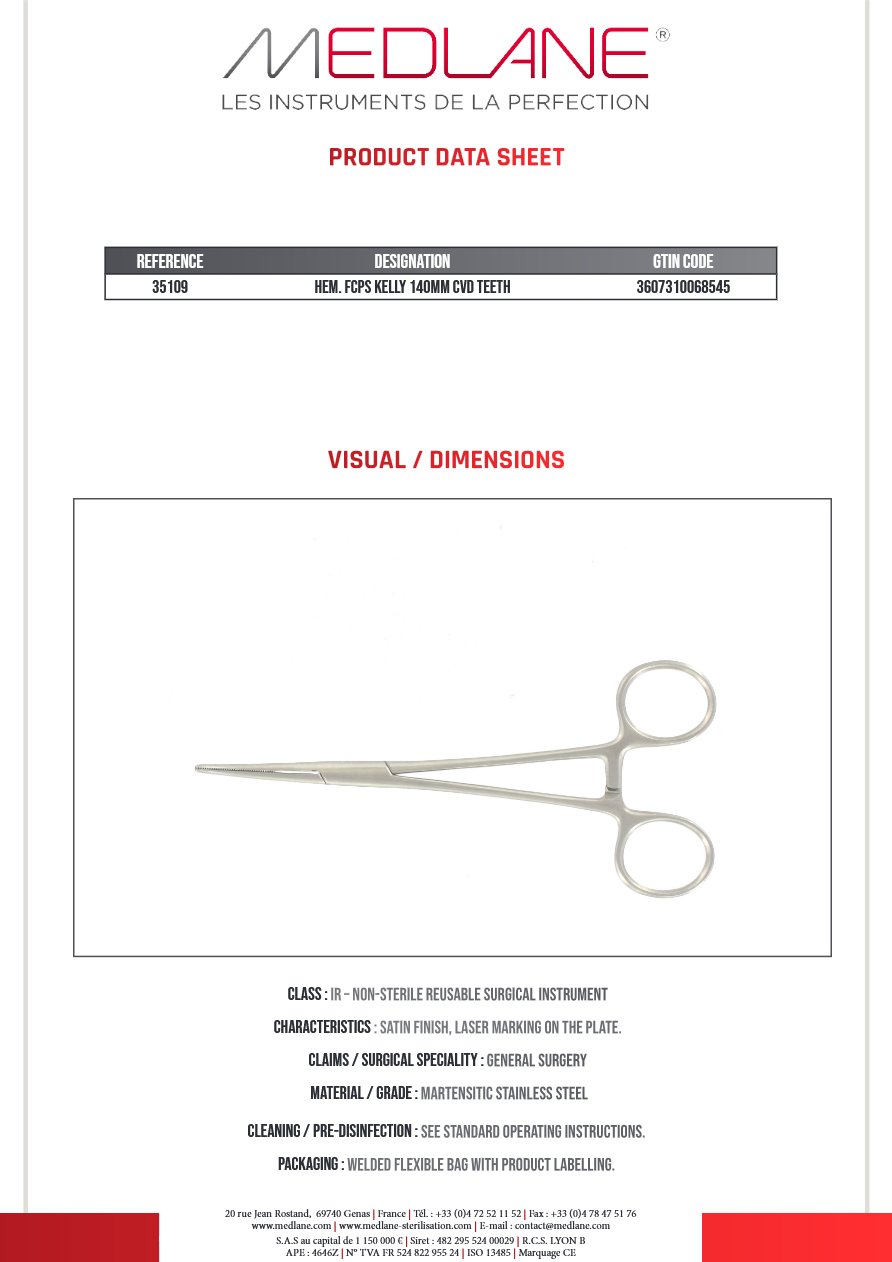
Pince Hémostatique Kelly 140 mm C. avec Griffes
REF · 35109· 140 mm· Curved· With teeth
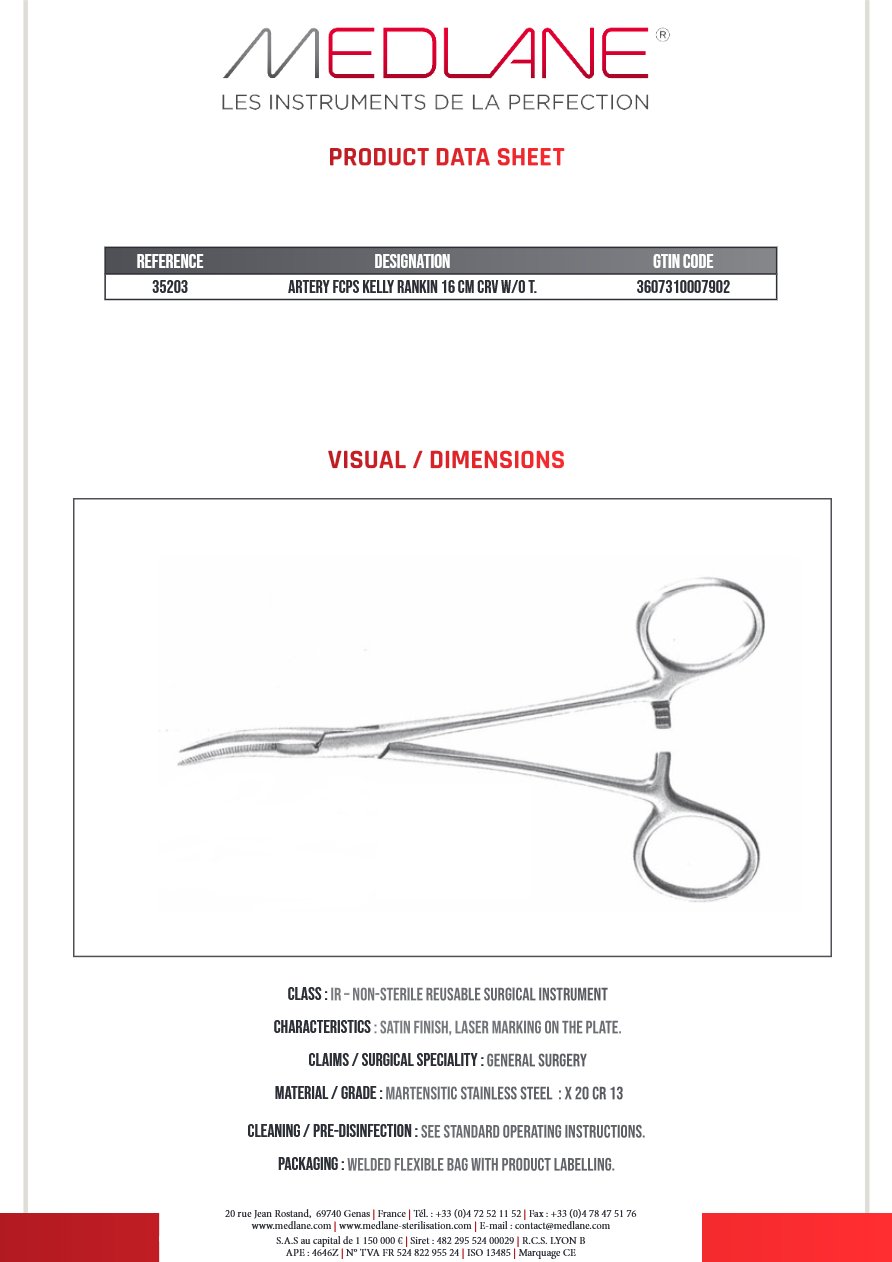
Pince Hémostatique Kelly Rankin 160 mm C. sans Griffes
REF · 35203P· 160 mm· Curved· Without teeth
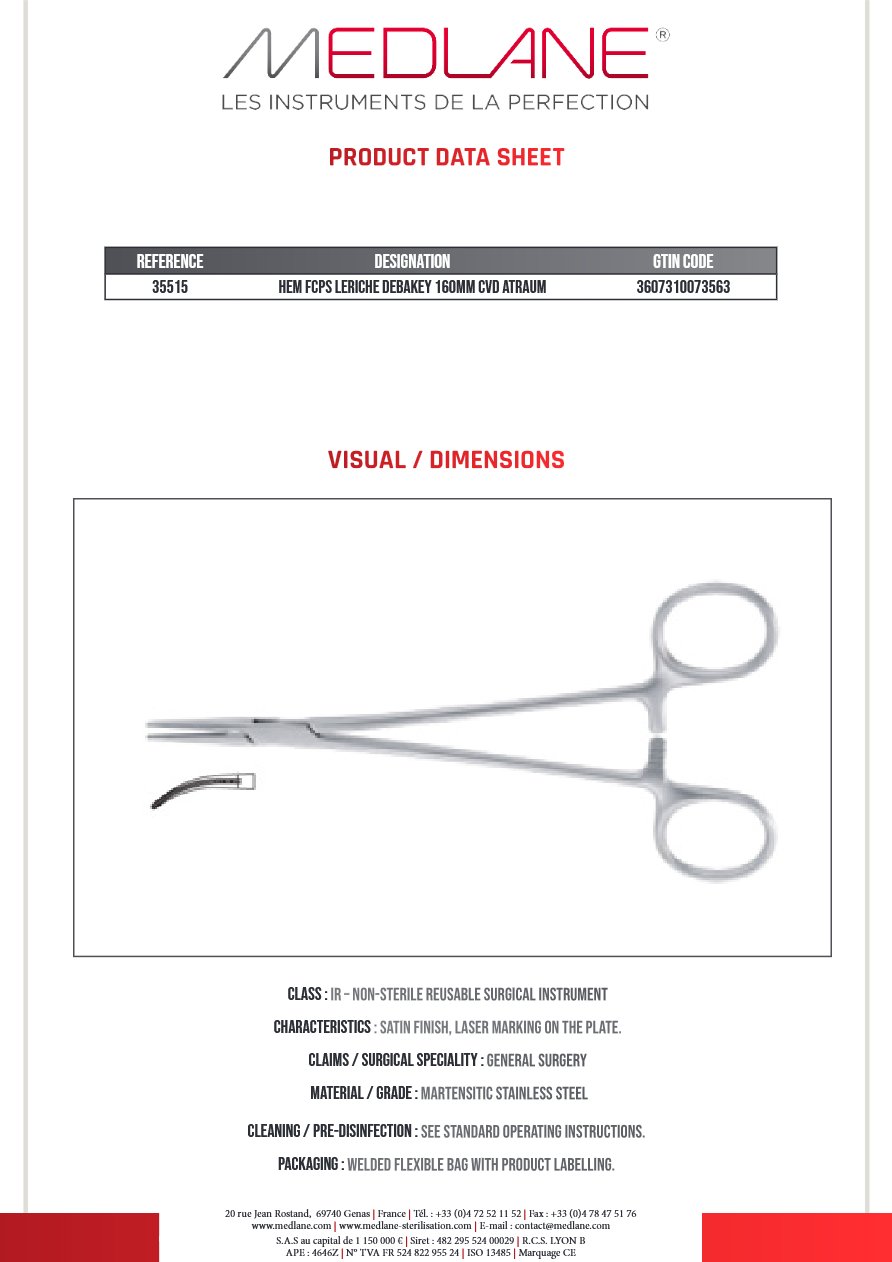
Pince Hémostatique Leriche Debakey 160 mm Courbe Atrauma
REF · 35515· 160 mm· Curved
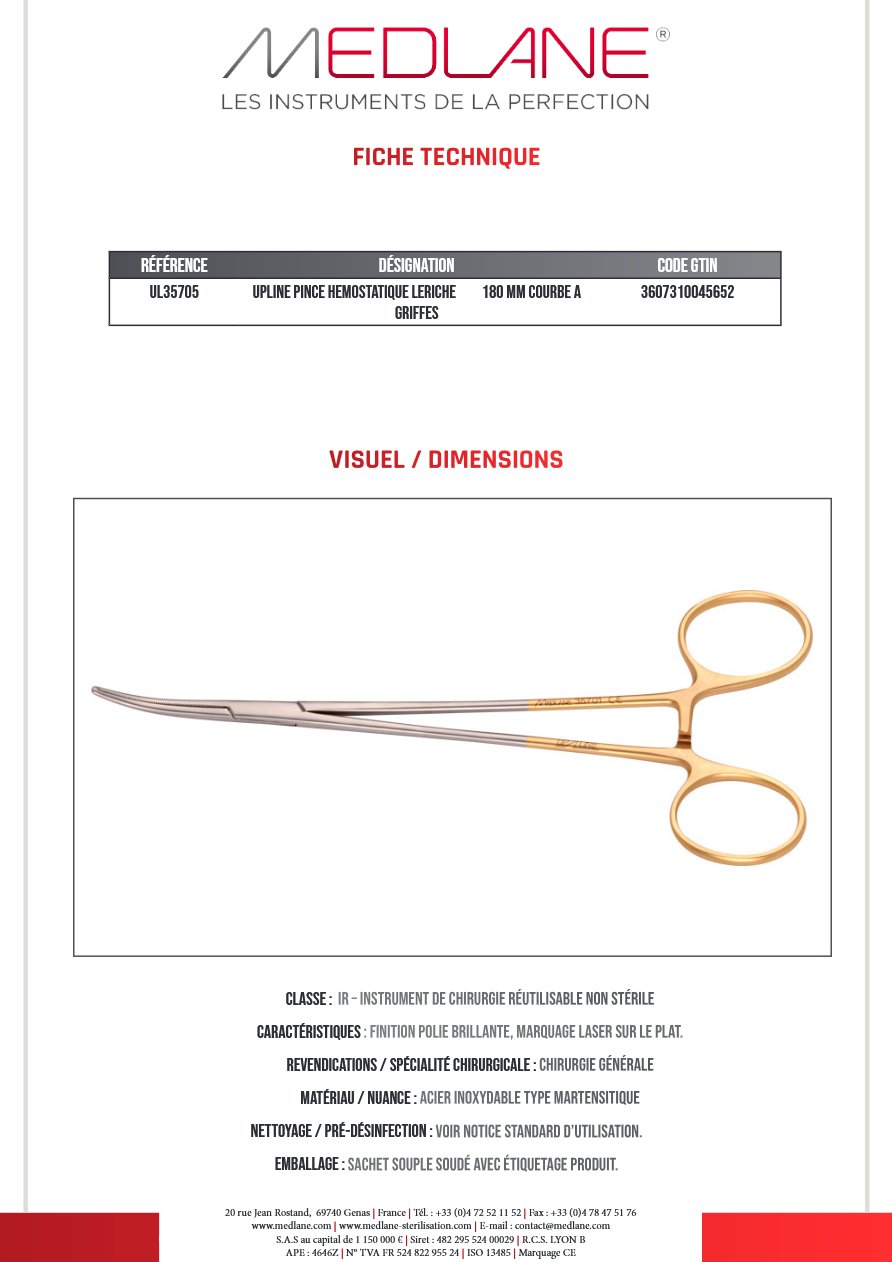
Pince Hémostatique Leriche Suedoise 140 mm C. avec Griffes Upline
REF · 35705P· 140 mm· Curved· With teeth
The name designates a family of instruments; the reference specifies the configuration.
Can you recognise them?
Among these five MEDLANE forceps, identify the family of each from the visual details.
REVEAL THE ANSWER
- A — KocherPince Hémostatique Kocher 140 mm C. avec Griffes · REF 35301P
- B — KellyPince Hémostatique Kelly 140 mm C. sans Griffes · REF 35101P
- C — CrilePince Hémostatique Crile 160 mm C. sans Griffes · REF 34502P
- D — HalstedPince Hémostatique Halstead 120 mm C. sans Griffes · REF 34906P
- E — LerichePince Hémostatique Leriche 150 mm C. avec Griffes · REF 35511P
Variants exist depending on the model: final identification is made from the exact reference and documentation.
Why identify them correctly?
Precise identification makes it easier to prepare and recompose sets, to inspect, maintain and replace like for like, to manage references and to communicate between theatre, sterilisation and technical services.
Learning to read a haemostatic forceps
- 01Which family?
- 02Which size and proportions?
- 03Straight or curved jaws?
- 04Serrations on which part of the jaws?
- 05Terminal teeth present or not?
- 06How fine are the jaws?
- 07Which exact configuration does the reference indicate?
- 08Are there MEDLANE gold rings signalling a tungsten carbide version?
Look at the jaws before reading the name.
Explore MEDLANE forceps
Kocher
Pince Hémostatique Kocher 140 mm C. avec Griffes
REF · 35301P· 140 mm· Curved· With teeth
Pince Hémostatique Kocher 140 mm D. avec Griffes
REF · 35401P· 140 mm· Straight· With teeth
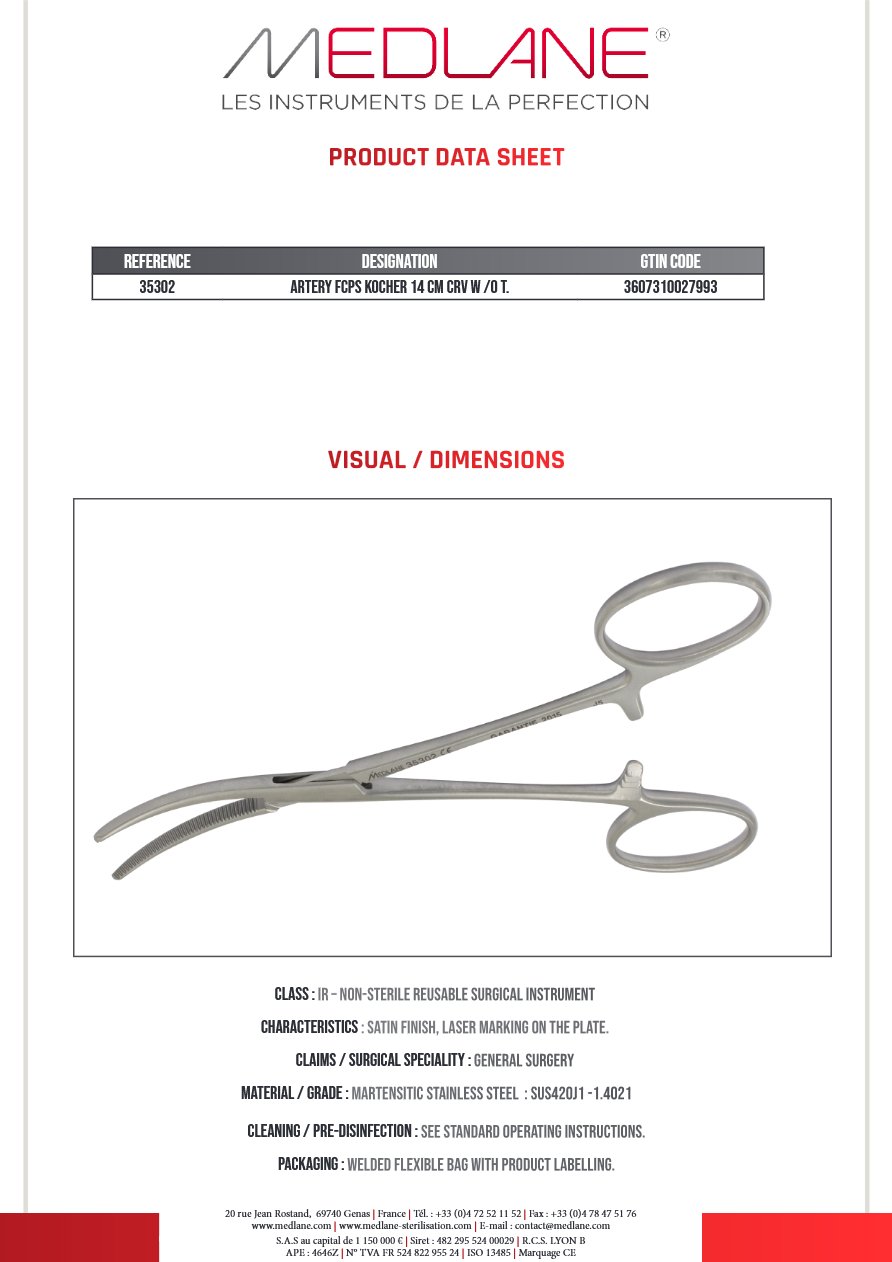
Pince Hémostatique Kocher 140 mm C. sans Griffes
REF · 35302P· 140 mm· Curved· Without teeth
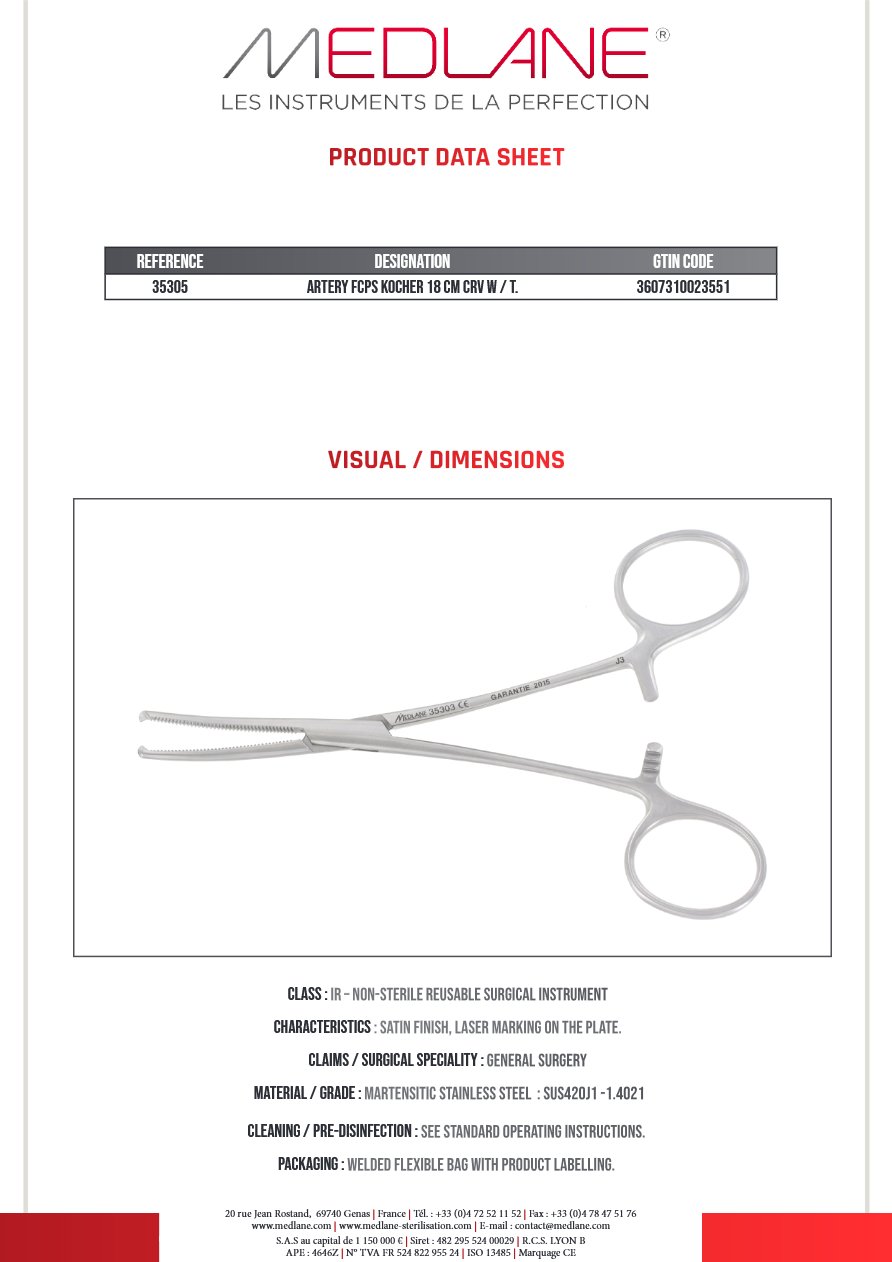
Pince Hémostatique Kocher 180 mm C. avec Griffes
REF · 35305P· 180 mm· Curved· With teeth
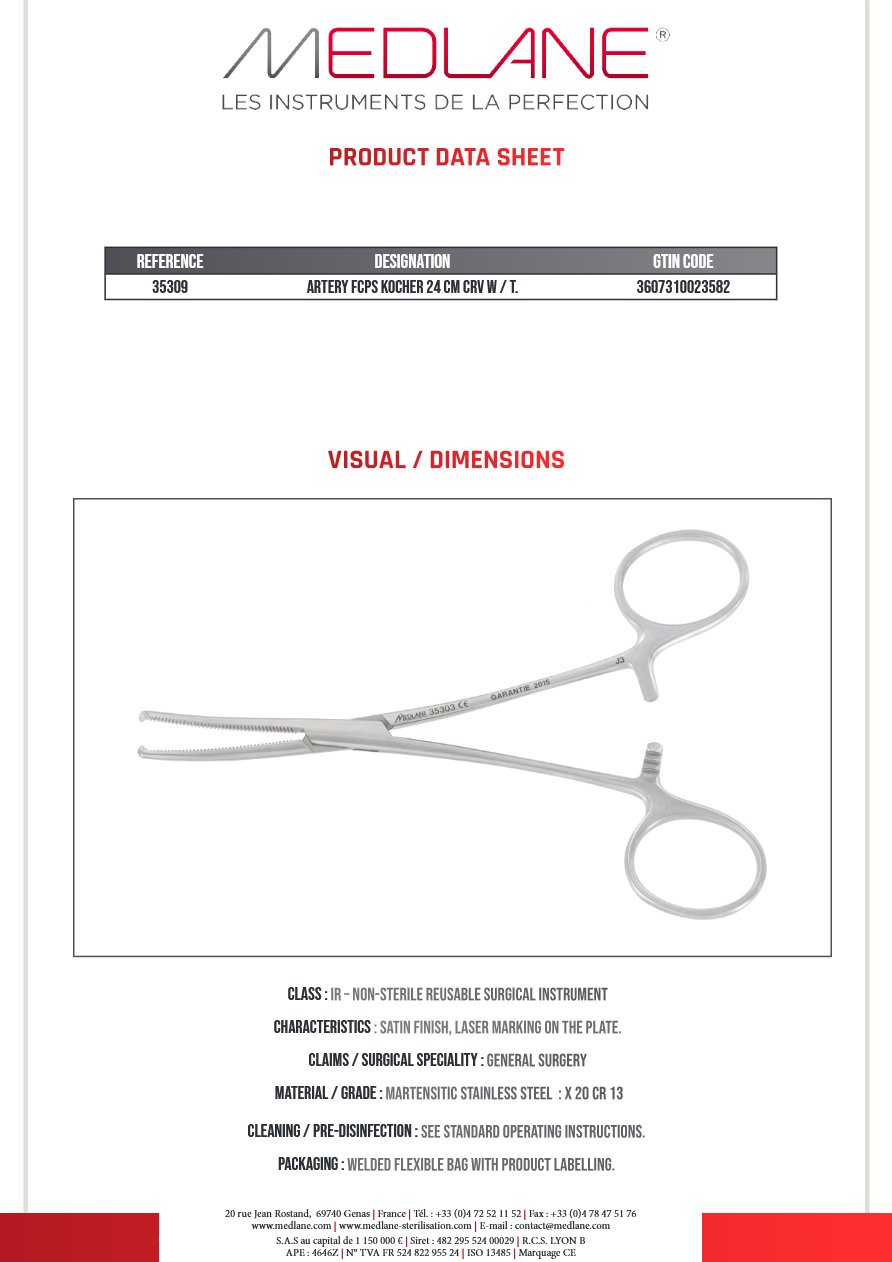
Pince Hémostatique Kocher 240 mm C. avec Griffes
REF · 35309P· 240 mm· Curved· With teeth
Kelly
Pince Hémostatique Kelly 140 mm C. sans Griffes
REF · 35101P· 140 mm· Curved· Without teeth
Pince Hémostatique Kelly 140 mm D. sans Griffes
REF · 35102F· 140 mm· Straight· Without teeth
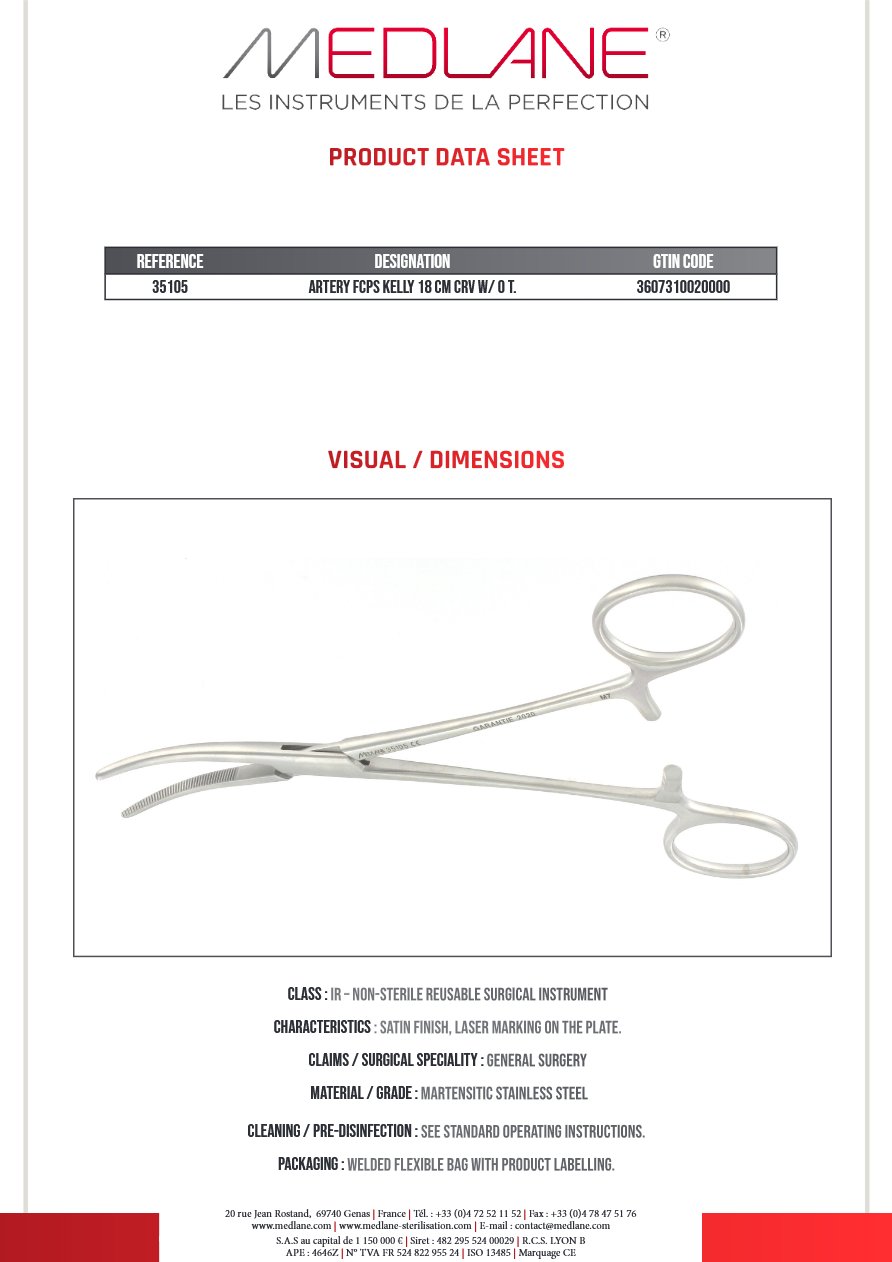
Pince Hémostatique Kelly 180 mm C. sans Griffes
REF · 35105P· 180 mm· Curved· Without teeth
Pince Hémostatique Kelly 140 mm C. avec Griffes
REF · 35109· 140 mm· Curved· With teeth
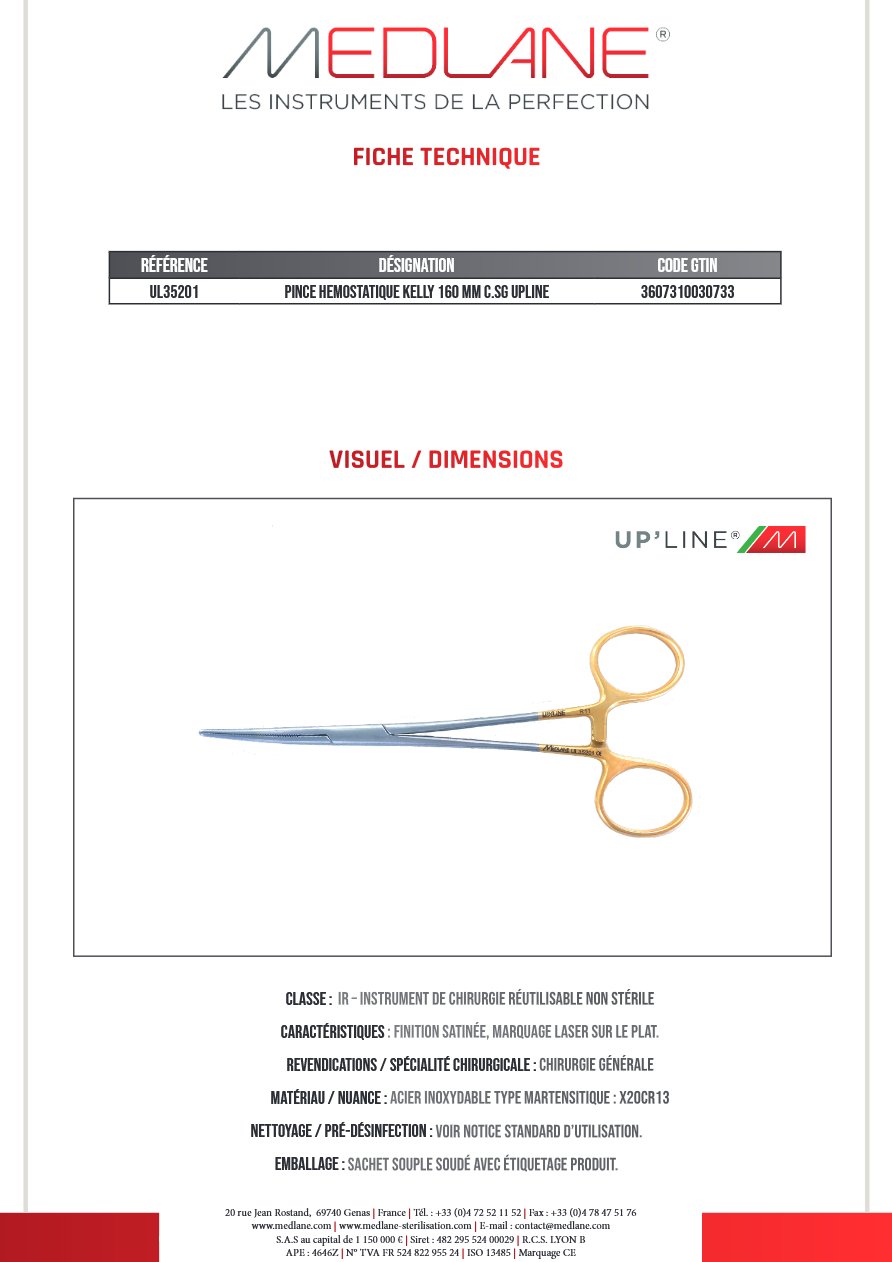
Pince Hémostatique Kelly 160 mm C. sans Griffes Upline
REF · UL35201· 160 mm· Curved· Without teeth
Crile
Pince Hémostatique Crile 160 mm C. sans Griffes
REF · 34502P· 160 mm· Curved· Without teeth
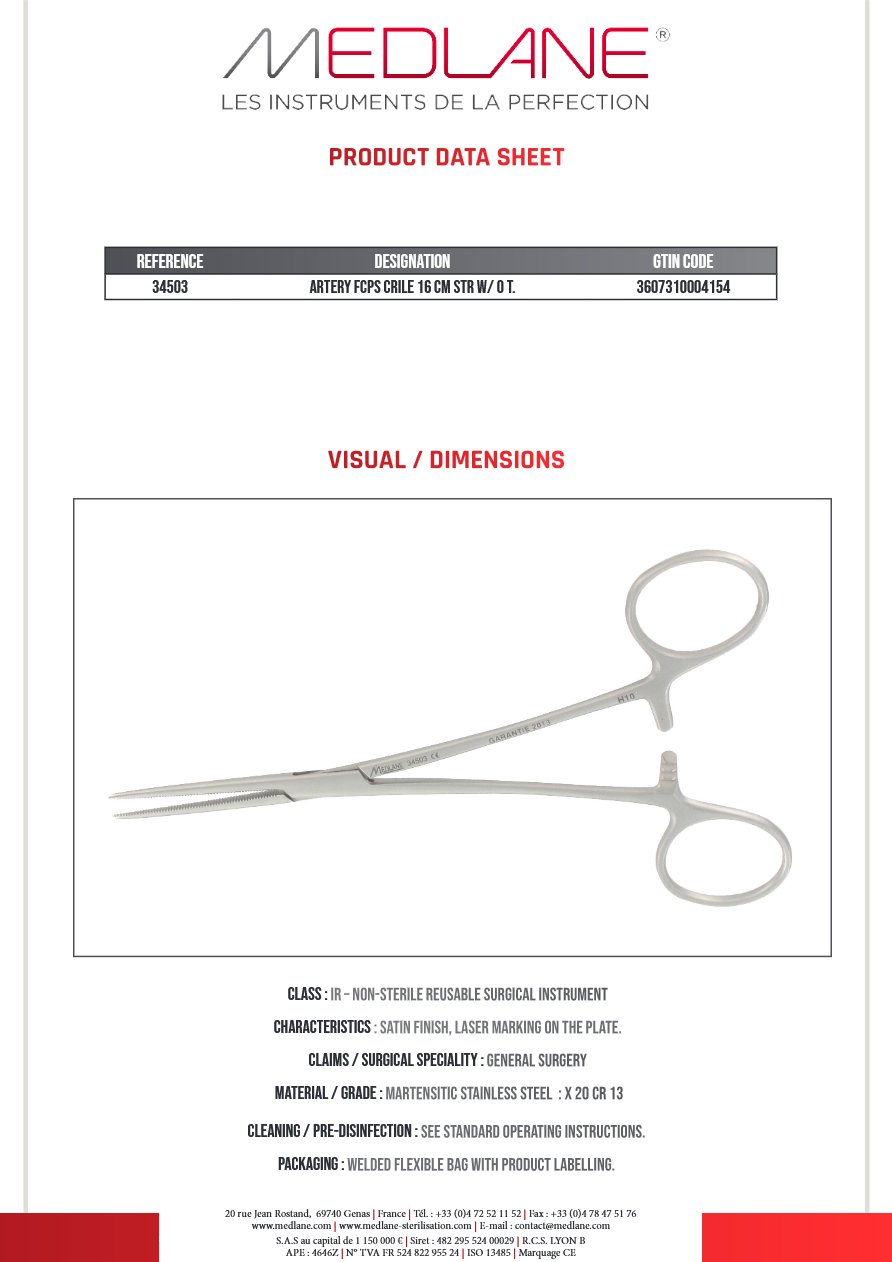
Pince Hémostatique Crile 160 mm D. sans Griffes
REF · 34503P· 160 mm· Straight· Without teeth
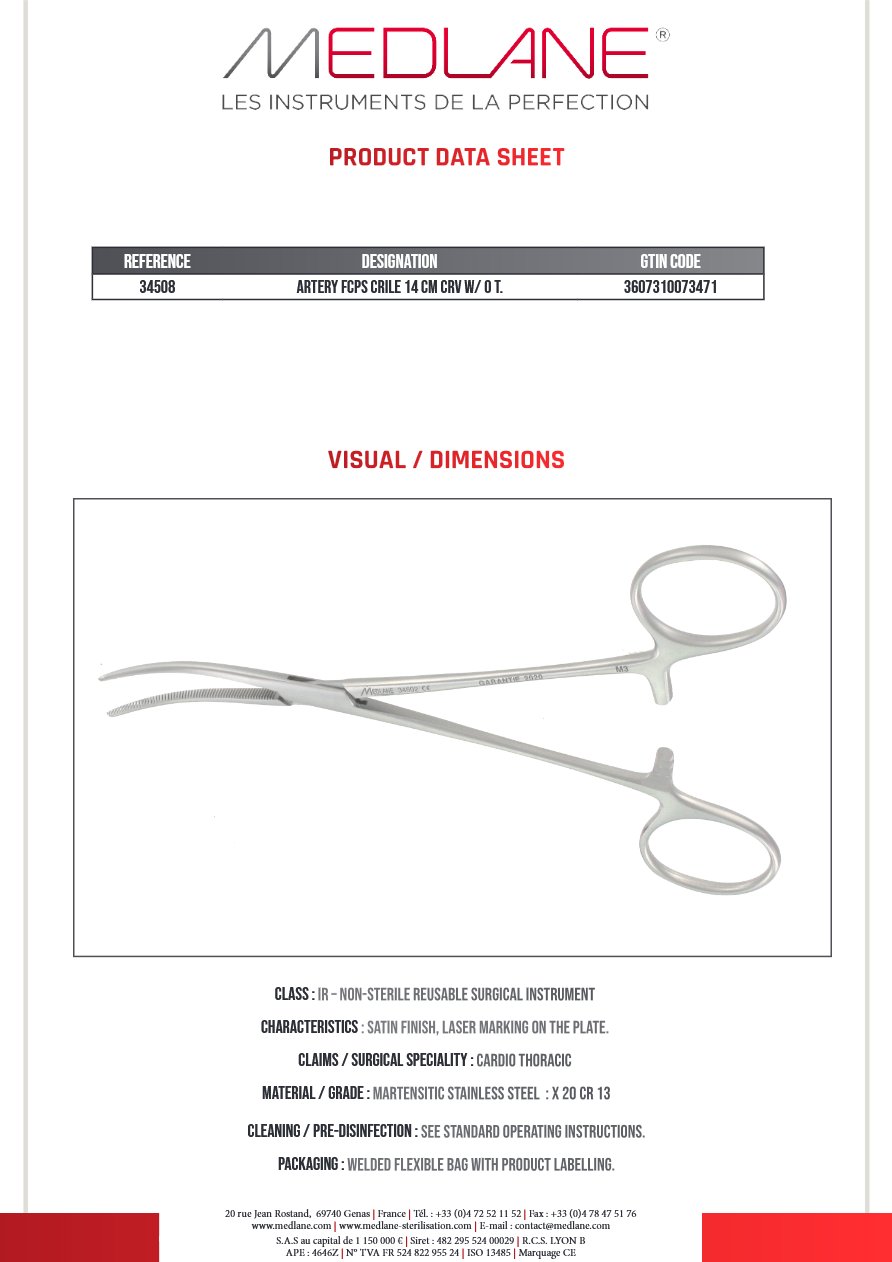
Pince Hémostatique Crile 140 mm C. avec Griffes Fine
REF · 34508· 140 mm· Curved· With teeth
Halsted
Pince Hémostatique Halstead 120 mm C. sans Griffes
REF · 34906P· 120 mm· Curved· Without teeth
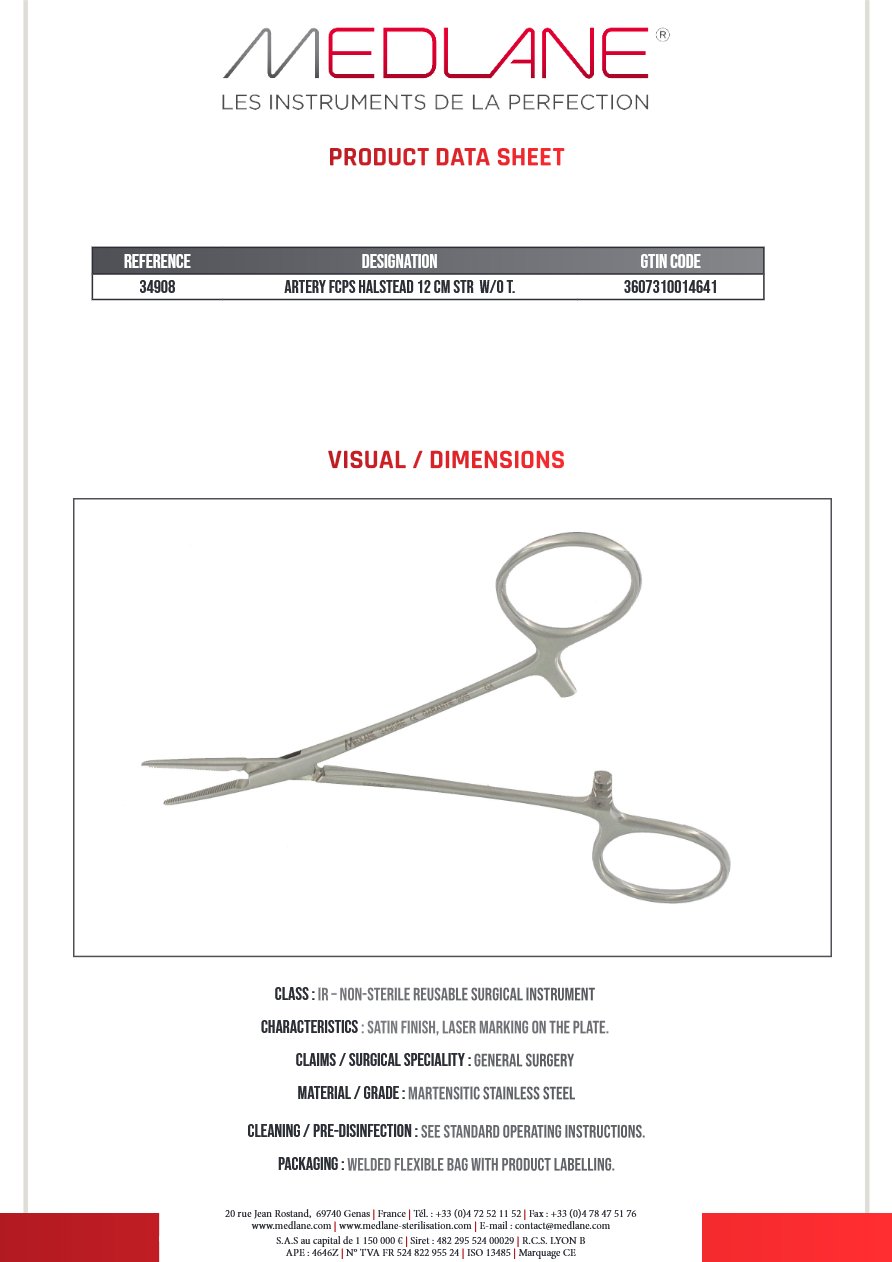
Pince Hémostatique Halstead 120 mm D. sans Griffes
REF · 34908P· 120 mm· Straight· Without teeth
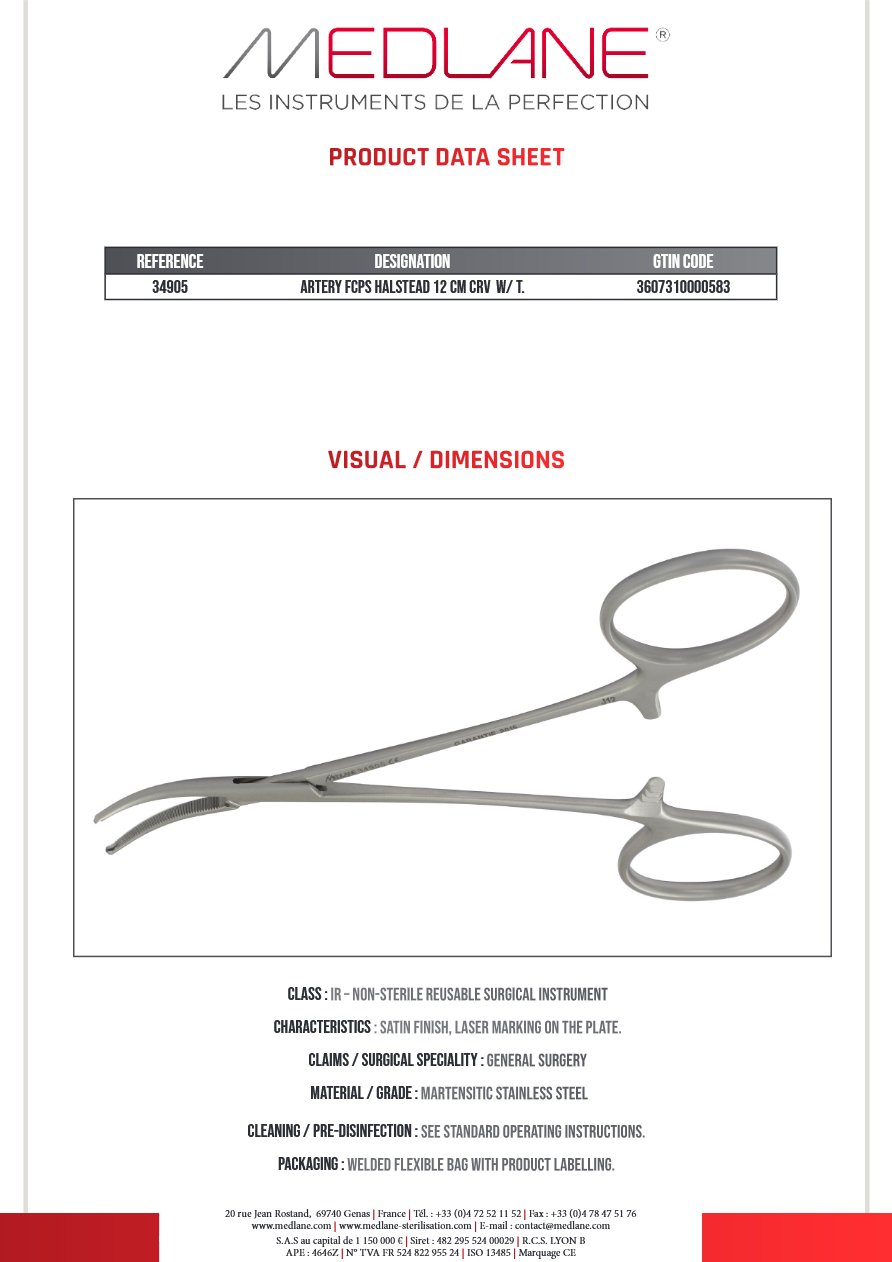
Pince Hémostatique Halstead 120 mm C. avec Griffes
REF · 34905P· 120 mm· Curved· With teeth
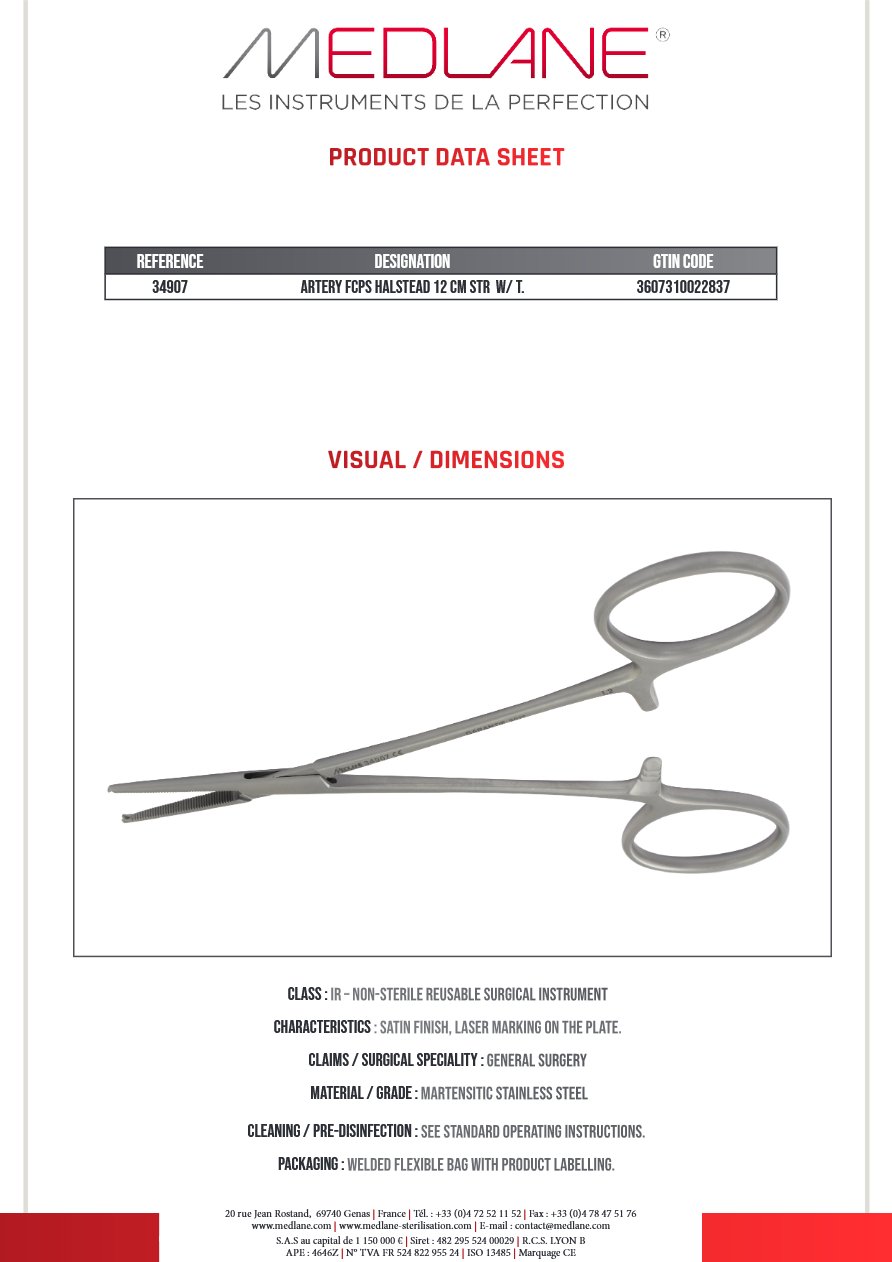
Pince Hémostatique Halstead 120 mm D. avec Griffes
REF · 34907P· 120 mm· Straight· With teeth
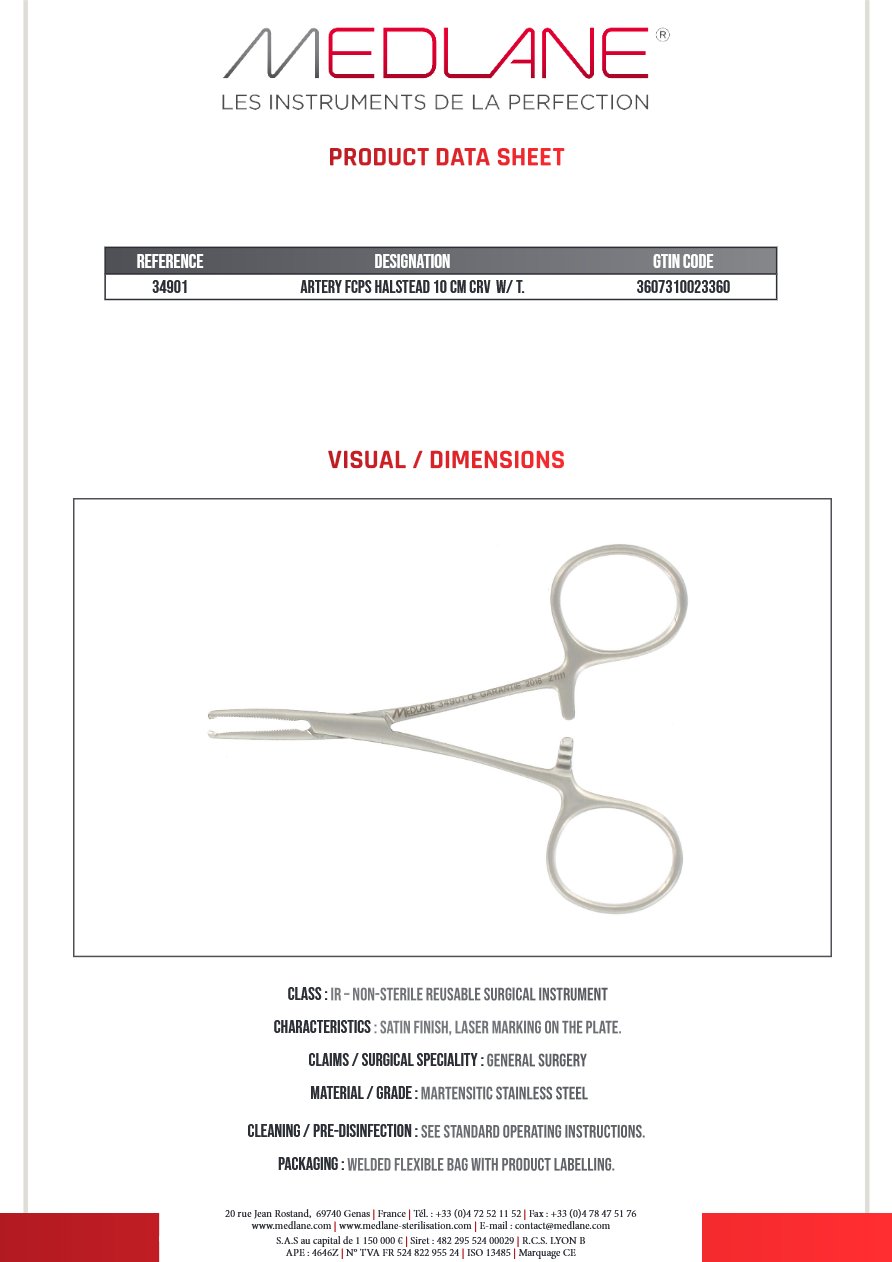
Pince Hémostatique Halstead 100 mm C. avec Griffes
REF · 34901P· 100 mm· Curved· With teeth
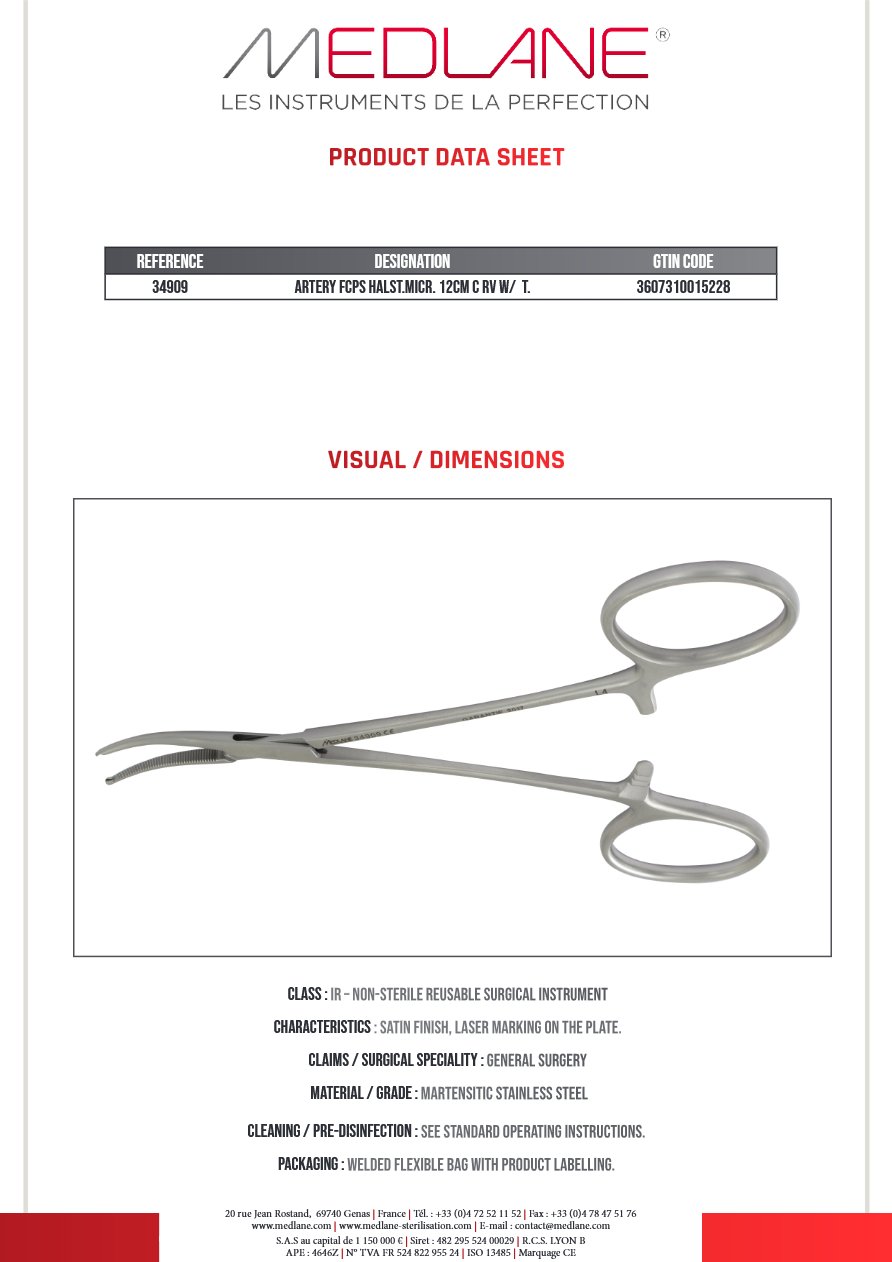
Pince Hémostatique Halstead 120 mm Micro C. avec Griffes
REF · 34909P· 120 mm· Curved· With teeth
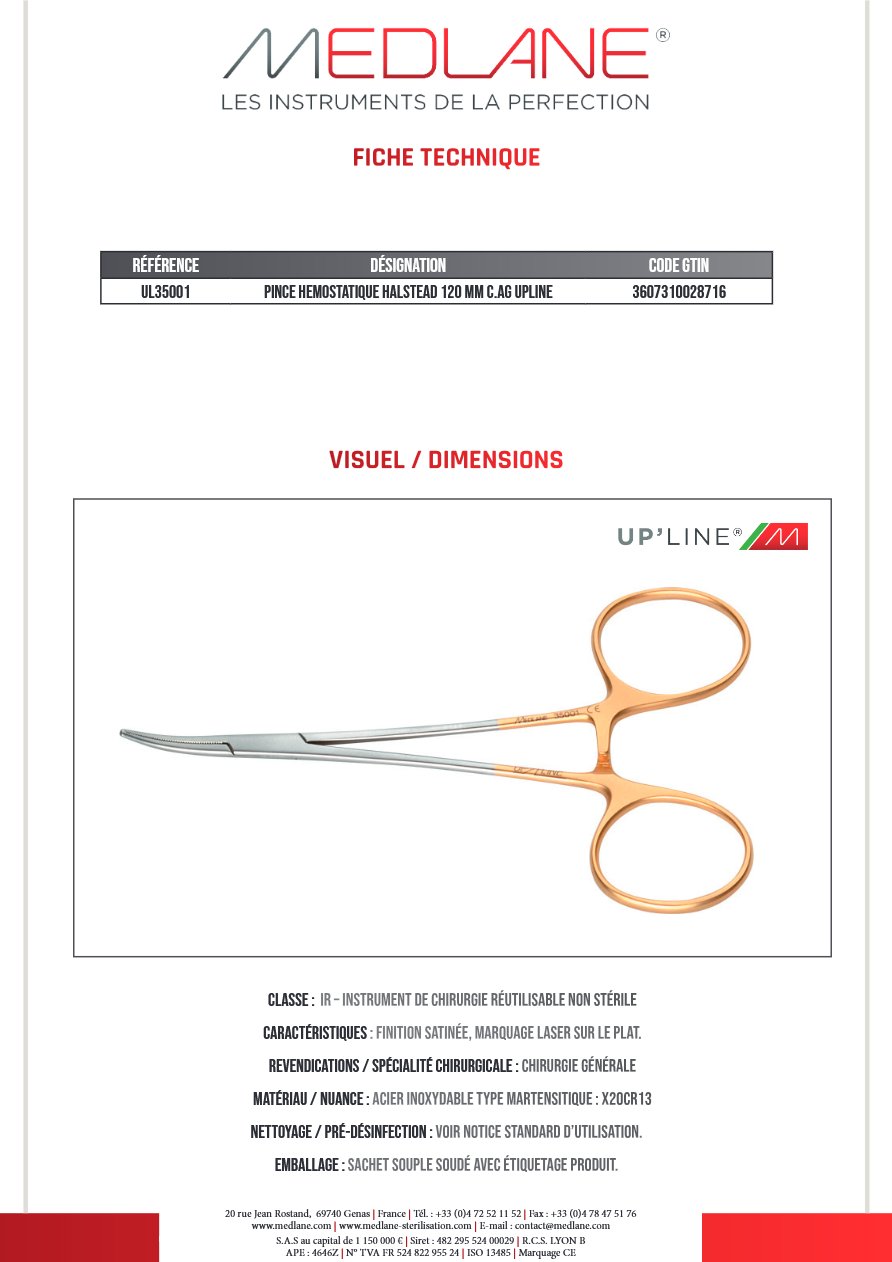
Pince Hémostatique Halstead 120 mm C. avec Griffes Upline
REF · UL35001· 120 mm· Curved· With teeth
Leriche
Pince Hémostatique Leriche 150 mm C. avec Griffes
REF · 35511P· 150 mm· Curved· With teeth
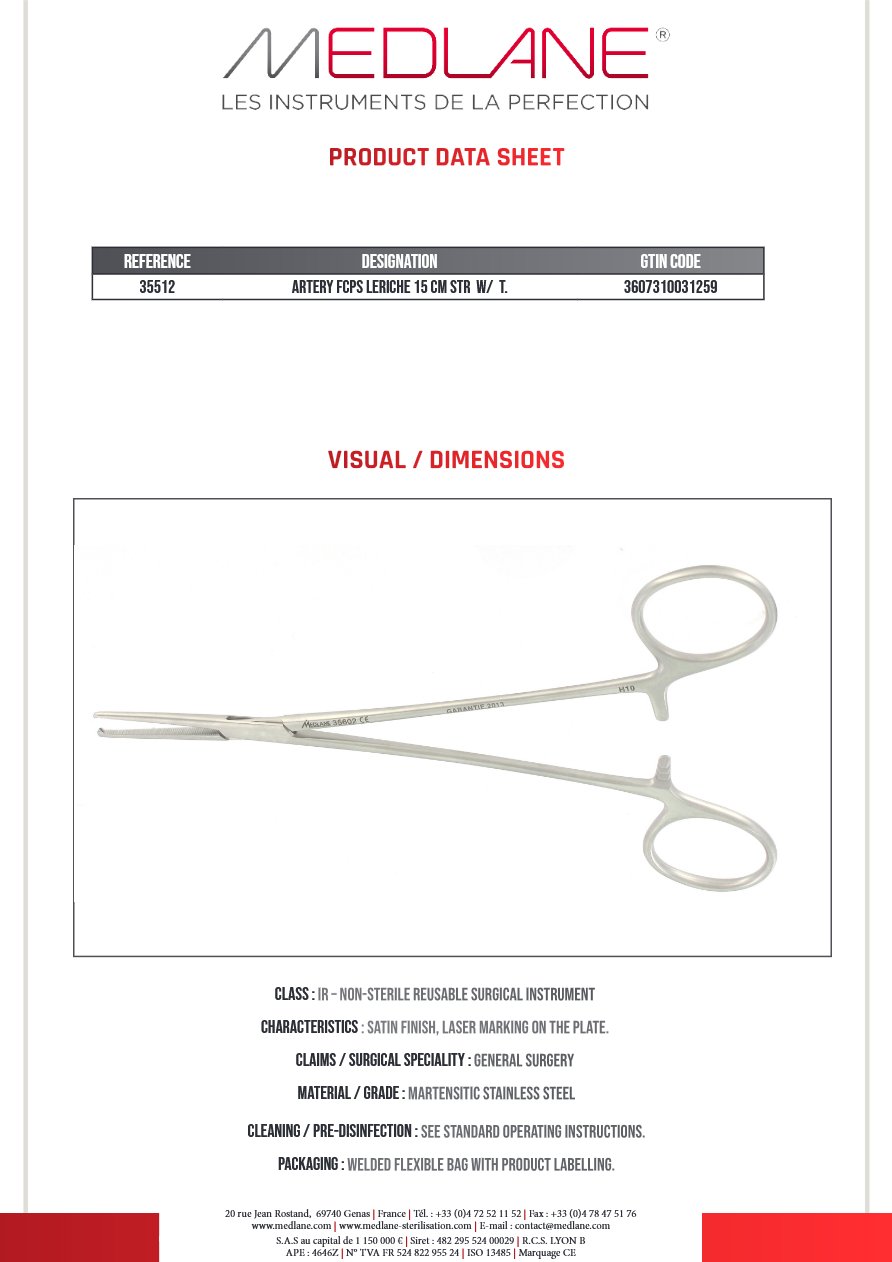
Pince Hémostatique Leriche 150 mm D. avec Griffes
REF · 35512P· 150 mm· Straight· With teeth
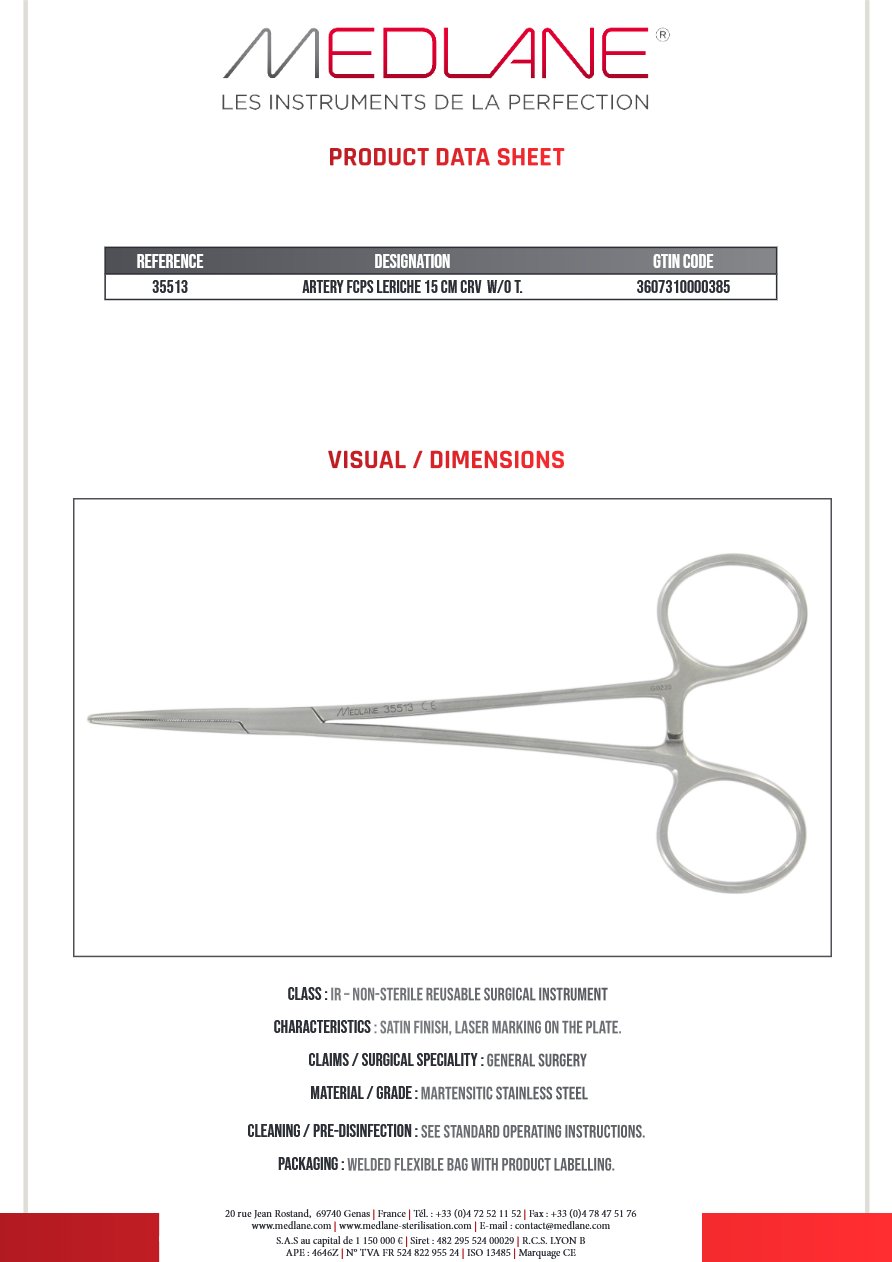
Pince Hémostatique Leriche 150 mm C. sans Griffes
REF · 35513P· 150 mm· Curved· Without teeth
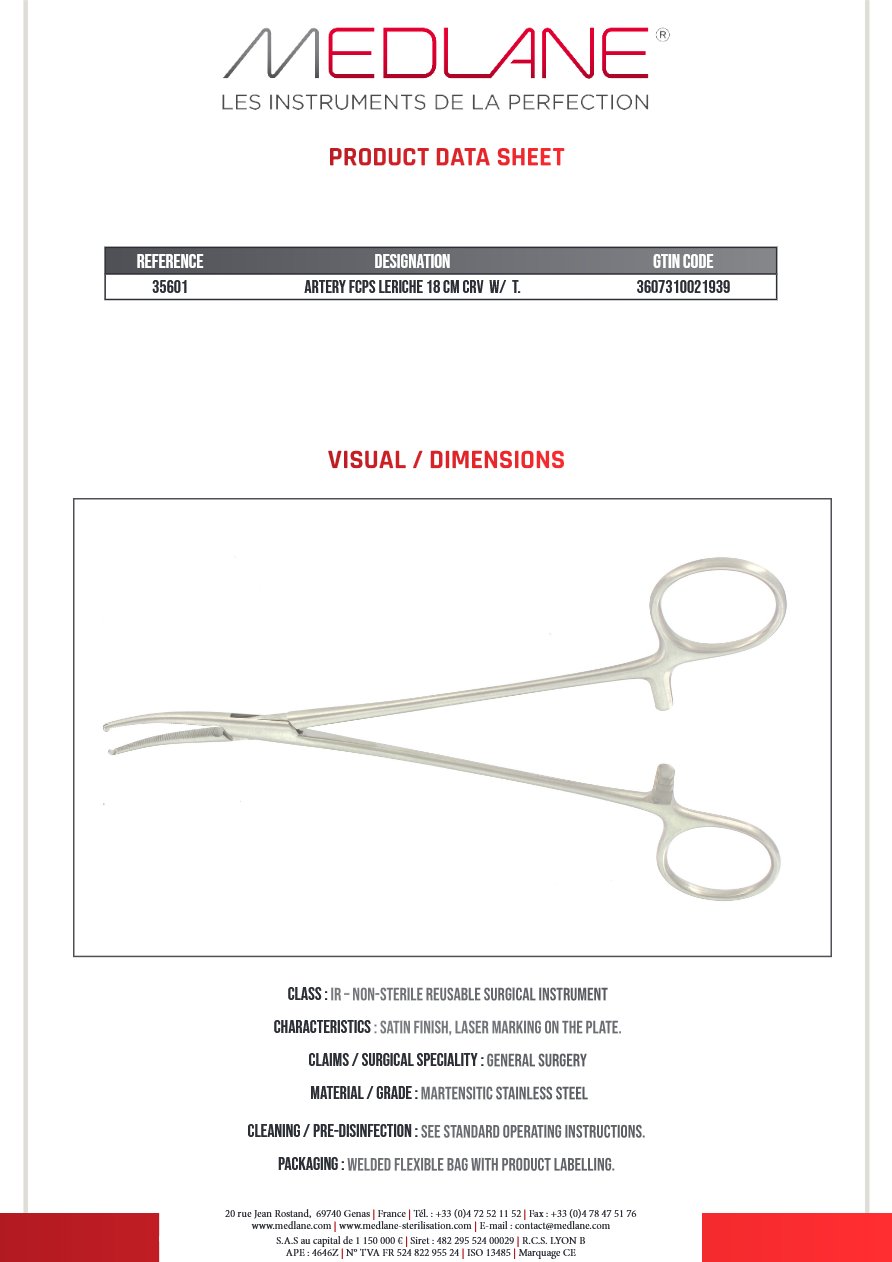
Pince Hémostatique Leriche 180 mm C. avec Griffes
REF · 35601P· 180 mm· Curved· With teeth
The essentials in 30 seconds
Conventional toothed Kocher
Terminal teeth are the key clue.
Kelly and Crile
A conventional difference in the extent of the serrations, depending on model and reference.
Halsted
Fineness and a more delicate format as the classic clue.
Leriche
In the MEDLANE catalogue: straight or curved, with or without teeth, several lengths.
A single jaw detail can be enough to change an instrument's identity.
Continue exploring instrumentation
- Guide no. 01Metzenbaum & Mayo scissors
Recognise them, understand their differences and identify their variants.
- Coming soon
DeBakey · Adson
Understanding grasping forceps
- Coming soon
Mayo-Hegar · Mathieu · Olsen-Hegar
Recognising the main families of needle holders
- Coming soon
Farabeuf · Deaver · Richardson
Recognising retractors
Documented control protocols
Extracts from MEDLANE technical documentation. They describe documented protocols, not instructions for use nor a statement of conformity.
Elasticity test
- The instrument is closed to the last ratchet tooth and held under load for 3 hours at room temperature.
- After the corrosion test, the instrument is inspected for cracks and permanent deformation.
Corrosion test
- A cleaning cycle is applied to the instrument before testing.
- The instrument is immersed in demineralised water at 90 °C for 1 hour, then air-dried.
- Visual inspection looks for rust marks, micro-cracks and other surface defects.